
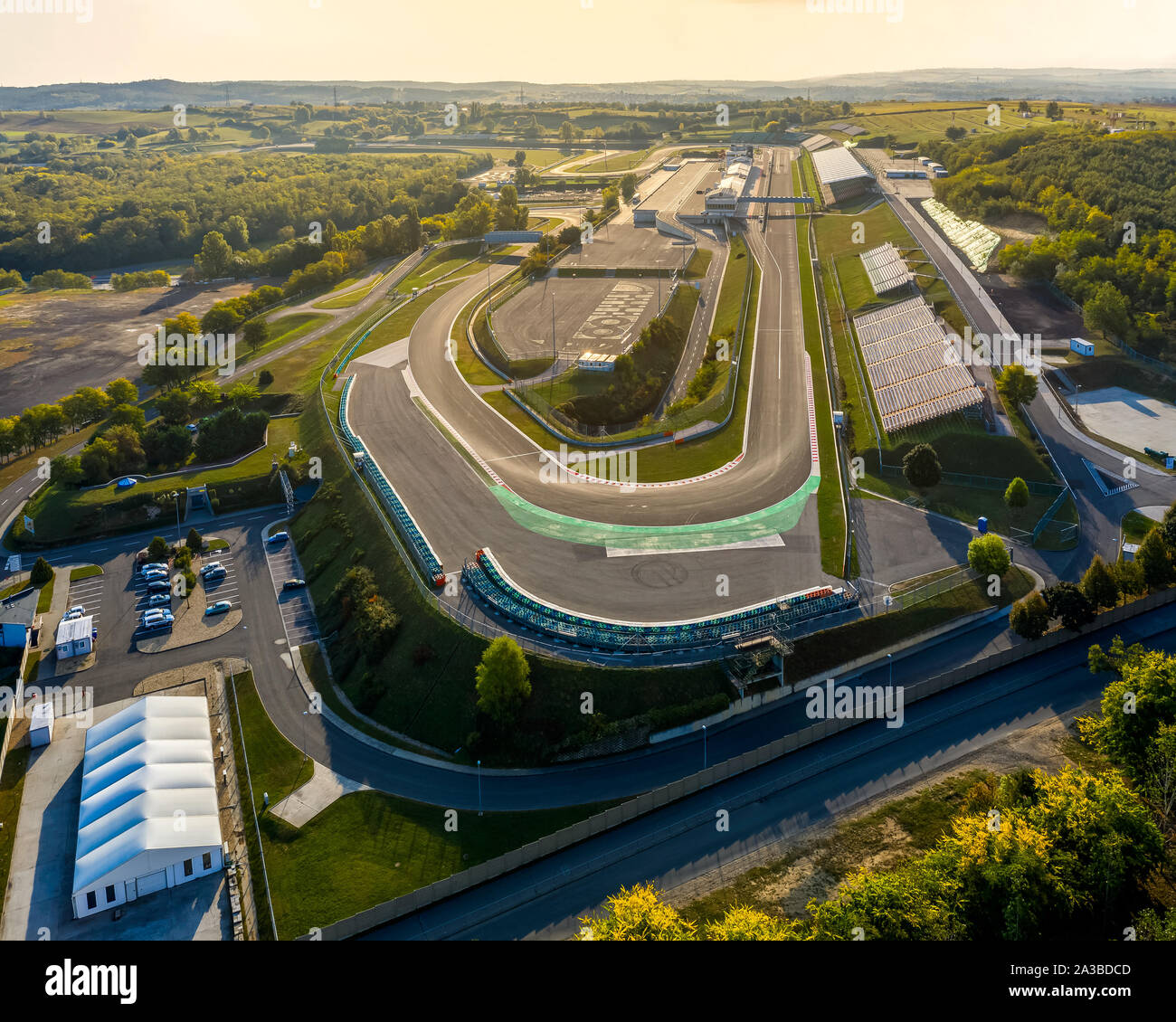
Hungaroring
The Hungaroring, located in a natural valley near Mogyoród, just northeast of Budapest, Hungary, has hosted the Hungarian Grand Prix since 1986 — making it the longest-running Formula 1 race in Central and Eastern Europe. The circuit was built in a remarkable eight months to host the first Grand Prix behind the Iron Curtain, and it has been a permanent fixture on the calendar ever since. The 4.381-kilometer circuit is characterised by its tight, twisting layout that has often been compared to "Monaco without the walls." With 14 corners, limited overtaking opportunities, and a surface that generates high tyre degradation, the Hungaroring places enormous emphasis on qualifying position, race strategy, and car setup. The narrow track width and lack of long straights mean that drivers must be at their most creative to find overtaking opportunities, often relying on strategic undercuts or DRS-assisted moves into Turn 1. The circuit sits in a natural amphitheatre, which provides excellent viewing for spectators from almost any position around the track. Turn 1 is a medium-speed right-hander at the bottom of the hill that serves as the best overtaking opportunity. The middle sector features a series of technical medium and slow-speed corners where mechanical grip is paramount. Turn 4, a long downhill right-hander, is particularly tricky and has caught out many drivers over the years. Despite its reputation as a processional circuit, the Hungaroring has produced some of Formula 1's most memorable races. Nigel Mansell's famous pass on Ayrton Senna in 1989 demonstrated that overtaking was possible with sufficient bravery. Jenson Button's stunning wet-to-dry victory from 14th on the grid in 2006 is considered one of the greatest drives in F1 history. More recently, Esteban Ocon took his maiden and Alpine's breakthrough victory in the chaotic 2021 race. The Hungarian Grand Prix traditionally takes place in late July, making it one of the hottest races on the calendar. Track temperatures can exceed 50°C, creating extreme conditions for tyres and drivers alike. The thermal stress on the cars adds another dimension to the engineering challenge, and teams must carefully manage cooling and tyre wear to succeed. Budapest itself is one of Europe's most beautiful and vibrant cities, offering spectacular architecture, thermal baths, and a renowned nightlife scene. The proximity of the circuit to the city centre makes the Hungarian Grand Prix one of the most accessible events on the calendar for fans, contributing to consistently strong attendance figures.