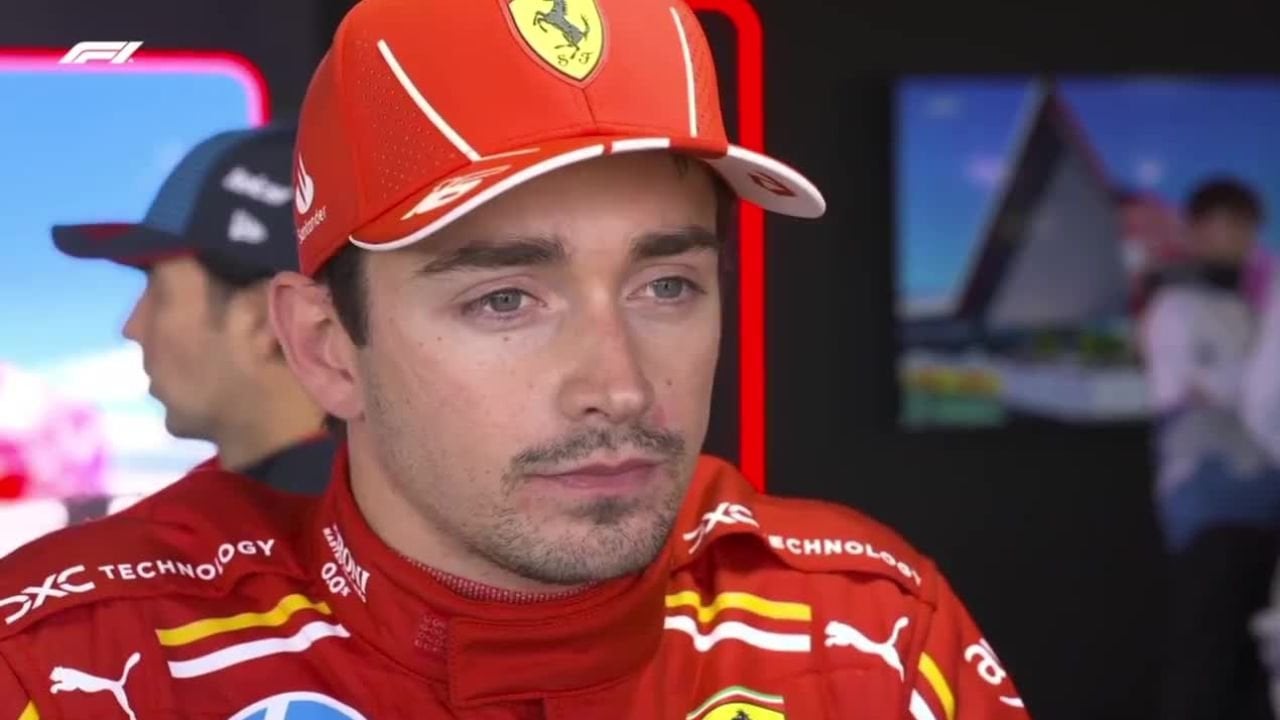
The Italian Grand Prix is months away but Ferrari's most important test of 2026 begins on Friday on the Ile Notre-Dame. The team arrives in Canada with a Miami upgrade package that did not deliver the lap time the simulators had promised, a Mercedes works team that has now won four grands prix in a row, and a McLaren outfit only sixteen points behind in the constructors' standings with the rest of its development programme still to land.
According to ScuderiaFans, Ferrari's post-Miami internal review reached a conclusion that is, in isolation, encouraging. The Maranello engineers did not flag any of the newly introduced components as failures. The aero parts, the mechanical updates, the cooling tweaks — they appear to do what they were designed to do. They simply deliver less of it on track than they did in CFD and the wind tunnel. That is the gap that Canada now has to explain.
It is also a gap that sits at the centre of Ferrari's entire 2026 concept. The Maranello power unit, designed under Enrico Gualtieri's department, is reportedly down 22 to 25 horsepower at peak output versus the Mercedes works engine, and is dealing with very real hybrid recovery limitations that bite hardest over a race distance. To compensate, the chassis department — with aero work led by Loix and contributions from Diego Tandi and Frank Sanchez — chose to throw the SF26 into a series of aggressive aerodynamic trades.
Three of those trades are central. A blown exhaust concept that uses exhaust gases to add load in specific phases. A reverse wing configuration that is expected to be particularly effective in low-downforce setups, of which Montreal is the most extreme. And a markedly reduced cooling mass, made possible by the new A67 six-cylinder engine, which is reportedly designed to run at unusually high temperatures. Each of those choices was deliberate. Each took on aerodynamic and reliability risk in exchange for power deficit recovery.
Canada is the first weekend on which all three trades can be evaluated together in the configuration they were designed for. The Gilles Villeneuve circuit's long straights and big braking zones reward aero efficiency and clean energy recovery. It is also a layout where Ferrari's stated strengths — traction under acceleration and mechanical grip out of slower corners — should genuinely play. Internal simulation work has, by ScuderiaFans' account, shown the SF26 looking competitive in the technical low-speed sections.
The concerns are at least as visible. Straight-line speed remains the weakness, and the underlying cause is electrical recovery and deployment efficiency. On a Montreal lap that fires the cars repeatedly in and out of acceleration zones, an inefficient deployment map punishes lap time everywhere. Add Miami's harder-compound disaster, where Ferrari drifted outside the optimal operating window and paid a heavy price, and setup choices here become outsized in importance.
Charles Leclerc and Lewis Hamilton carry the responsibility of confirming — or refuting — the concept. Mercedes is bringing an upgrade package described by one paddock estimate as a 0.2-0.3-second-per-lap gain. McLaren is expected to run closer to full specification of the package it began in Miami. If the SF26 cannot at least lock in its place as the second-fastest car at a circuit that should suit it, the technical case for Maranello's aggressive 2026 concept becomes considerably harder to defend through the summer.

The single comforting variable is that Ferrari has had a clear two weeks to interrogate Miami's data and reassess the setup decisions that quietly compromised the package's potential. Canada will not be a definitive verdict on the year. It will, however, tell us whether the aero-for-power trade-offs that Maranello chose over the winter were the right ones — or whether the rest of 2026 will be spent paying for them.