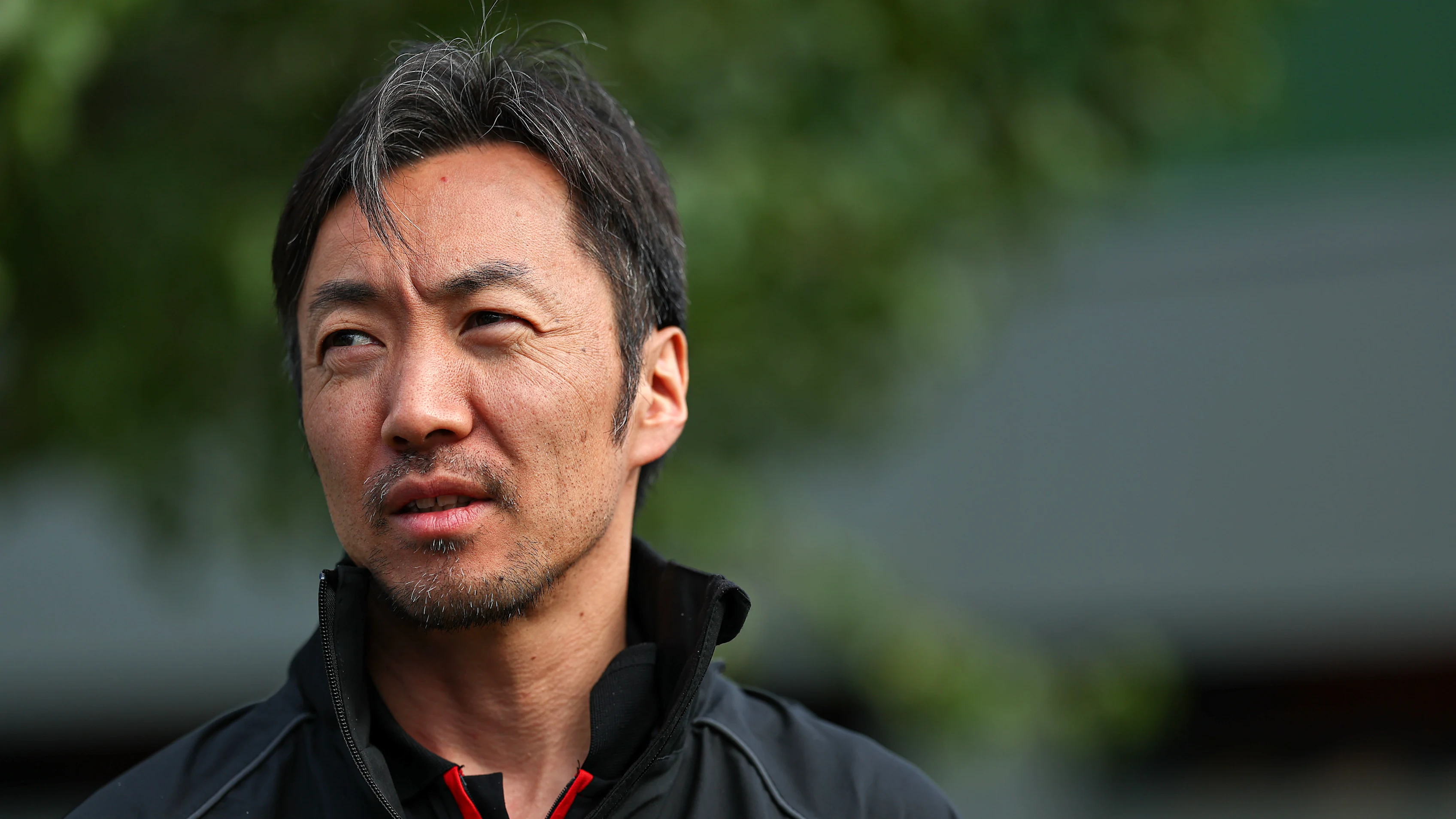
When Ayao Komatsu spoke at the Suzuka team principals' press conference, he did something his peers rarely do: he listed what his team can't yet do.
Haas, he confirmed, is in the middle of an infrastructure upgrade designed to close the off-track development gap that has separated the team from F1's heavyweights for years. Centrepiece: a driver-in-the-loop simulator at the Banbury base.
"We know what we are lacking. We know what we can do," Komatsu said. "We're doing parallel work, obviously making the best of what we've got. But at the same time we are in the process of installing a simulator in Banbury, as well as a few other tools."
This matters more in 2026 than at almost any point in the modern era. The new technical regulations have made simulator correlation more valuable, not less. Active aerodynamics, complex energy harvesting and deployment, and a heavy reliance on power unit drivability mean a team that can iterate cheaply in software has a multiplier on every track session.
Mercedes, Ferrari and McLaren operate sophisticated simulator banks. Red Bull's Milton Keynes facility has been a development reference point for over a decade. Haas, by contrast, has historically run a leaner organisation built around its Maranello and Banbury bases, with significant reliance on Ferrari hardware and tools. The Banbury simulator is the team's most visible step yet toward genuine independence.
Komatsu's framing — parallel work, making the best of what we've got — is also a quiet rebuke of the idea that smaller teams just need to spend more. The cost cap means they can't simply outspend the big four. The challenge is making each pound of investment translate into a higher percentage of useful output.
The immediate season has been a mixed bag. Oliver Bearman opened with strong showings before a difficult Suzuka Q1 elimination, while Esteban Ocon has been quietly accumulating points-paying weekends. Without development tools to convert track findings into car upgrades at a competitive cadence, those results risk becoming a ceiling.

Komatsu has been around long enough — first as Haas's chief race engineer, now as team principal — to know infrastructure spend pays back over multiple seasons rather than the next race. The Banbury simulator is unlikely to rescue the spring of 2026. Its existence is a marker of where this organisation now thinks it belongs.
Gene Haas's stated ambition is to compete, not just survive. Komatsu's Suzuka comments were a quiet, specific update on the practical work behind that ambition.