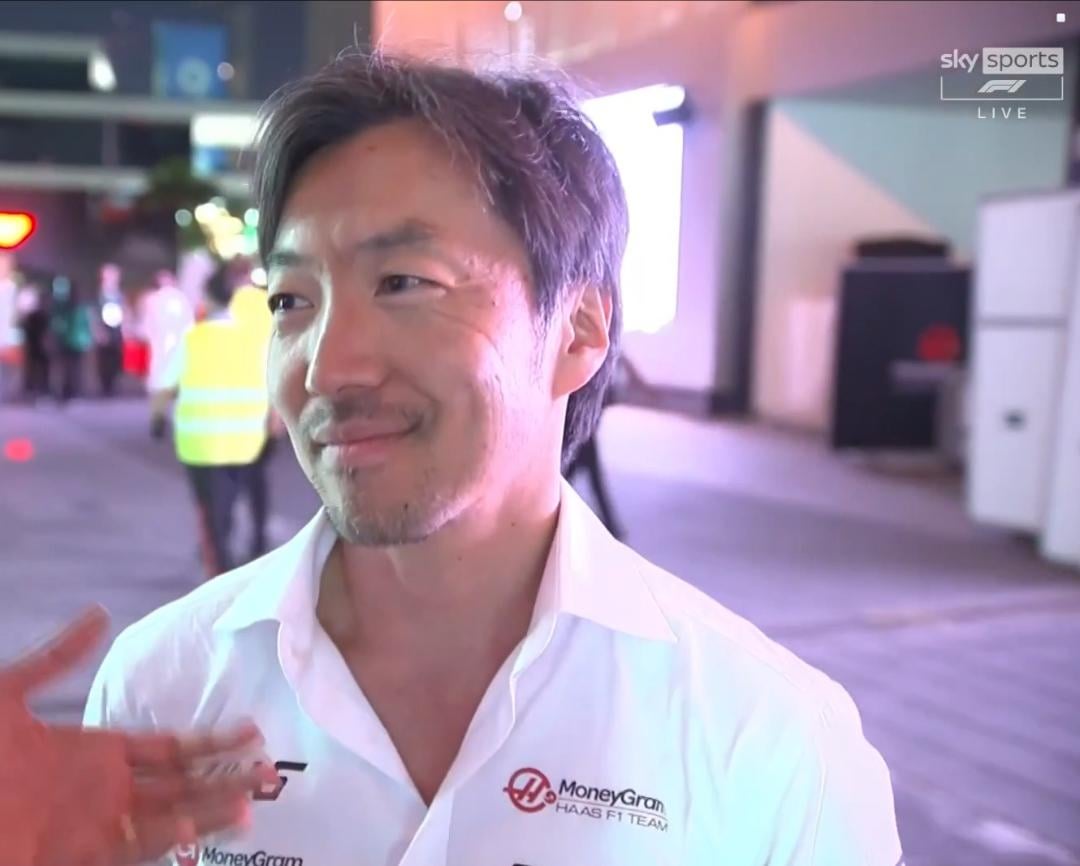
Haas team principal Ayao Komatsu has spent most of 2026 quietly. The recent Essential F1 podcast special is the closest he has come to a public debrief on the new era - and the answers across two hours of conversation make clear that the 2026 season being broadcast is only the opening sketch of the championship that will actually be decided in November.
Komatsu argued the new ruleset has redefined what an F1 team has to be good at. The fastest car in March will not be the fastest car in October, in his read of the regulations.
"I'm really really grateful that we got Christmas shutdown now in Formula 1, because if it wasn't for shutdown, nobody would have stopped," he said. "We all want drivers to be driving to the limit of the grip in qualifying, which wasn't the case before. Now is a completely development race, which is of course a huge challenge for us. But I'm not sitting here complaining. That's who we are. It's a huge challenge. What you see now, I bet it's going to be very different to what you see in race 20 or race 22."
That is a striking thing for the principal of a midfield team to say in public, particularly one that has historically relied on a Ferrari technical alliance to keep its cost base in check. The implication is that Haas will trade short-term comfort in the standings against the chance of a much bigger jump later in the season - and that the smaller teams who have already started 2026 on the back foot may yet outrun the bigger names if they can keep upgrading.
The second half of the interview took the conversation into far heavier territory. Six years on from the 2020 Bahrain Grand Prix, Komatsu was asked about the night Grosjean - then in his car - speared through the barriers at Turn 3 and was trapped inside a fireball for nearly half a minute. Komatsu had been on the Haas pit wall.
"I couldn't even cry," Komatsu said. "Initially I was on the pit wall. I saw the fire goes up. I didn't know immediately it was Roman. Then I'm sure everything felt like eternity, but I'm sure it was really quick. But then once I realised Roman, that was Roman - like, immediately you think he's dead, right? I didn't see him come out."
The pause in the way Komatsu told the story is the part that catches you. He is normally calm to the point of being deadpan, and the structure of the recollection is almost engineering-like - fire, identification, time perception, outcome - until you reach the sentence that ends with him concluding that his driver was dead. That admission, on a podcast, by a team principal still working in the paddock, is the part fans rarely hear out loud.

The dual nature of the interview is its strength. The same person mapping out Haas's path through a "completely development race" against teams with vastly bigger budgets is the same person sitting with the memory of a moment that should not have been survivable. There was no rehearsed line about how Formula 1 is safer now. Just the careful description of what he saw and what he assumed in the worst seconds of his career.
Komatsu spent the opening minutes patiently correcting the pronunciation of his own name and joking that "all of them is fine because all of them are equally wrong." That self-effacing tone, paired with the candour about Grosjean and the clear-eyed read on 2026, is what makes him one of the more interesting voices on the modern Formula 1 pit wall - even if he prefers not to be heard from often.