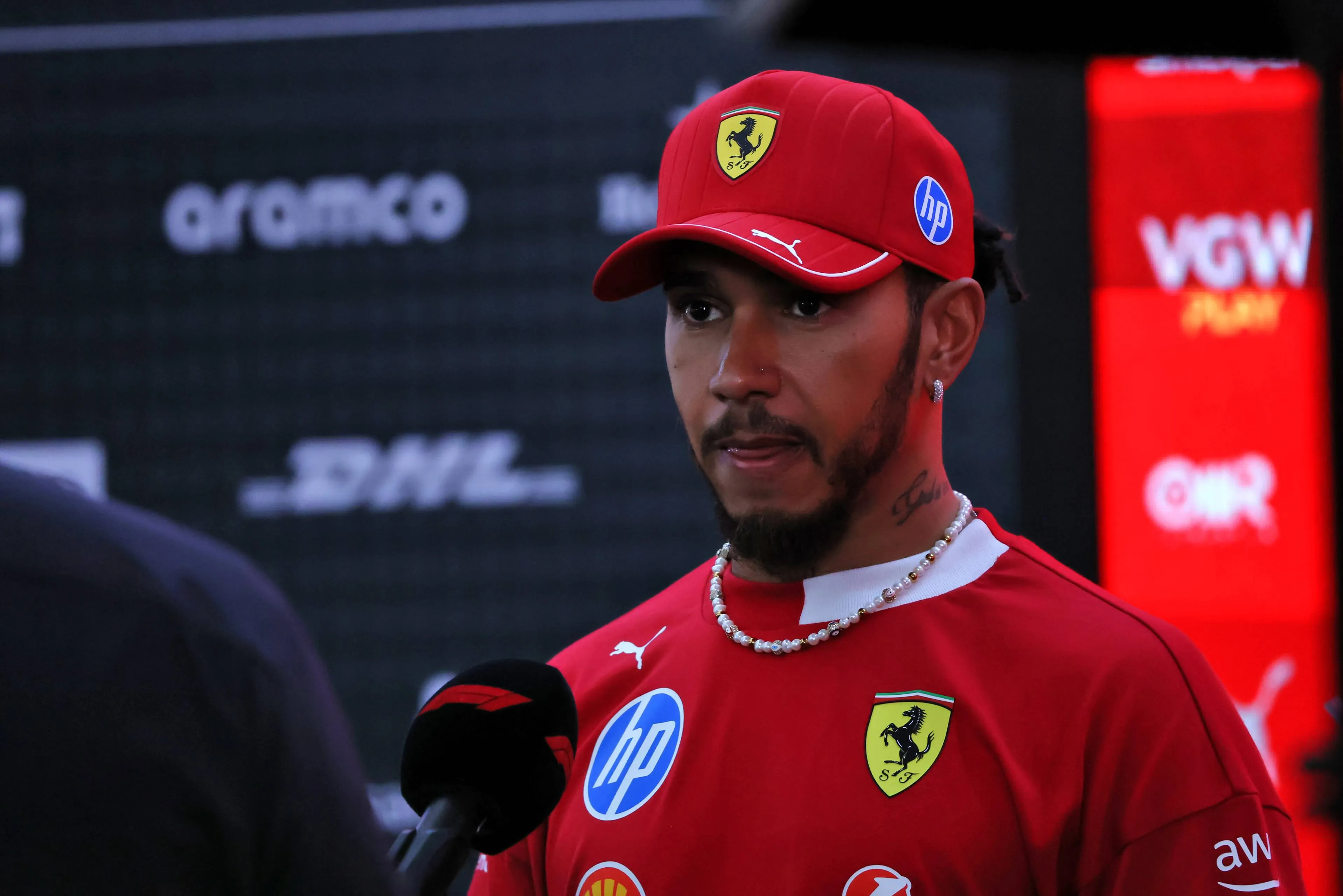
A double pit stop at Spa-Francorchamps cost Ferrari €30,000 and a mandated procedural review, after Lewis Hamilton pulled away from his box and into the path of one of the team's own mechanics.
Nobody was hurt. The mechanic was pushed to his knees and walked away. Hamilton held fourth. The dispute that followed was about responsibility, and about whether a fine fitted the offence.
Talking to Sky Sports, Hamilton described a driver reacting to the only signal he could see.
"The green light went and so I went," he said, adding that the sightlines in a pit box do the rest: "You're looking over here [to the left at the lights] you're not looking over there so that's more probably on the team, ultimately."
What went through his head next had nothing to do with the stewards.
"But when it happened, then I noticed him and I stopped and it just went through my mind in that moment was back when Kimi hit and [a mechanic] broke a leg and my heart really sank for a second," Hamilton said. The reference is to Bahrain in 2018, when Kimi Raikkonen ran over Francesco Cigarini and left him with a double fracture. He revisited it again with GPblog: "Luckily, all I could think at the time was back when Kimi did a leg, and I was like, 'Oh.' That's what I thought initially, but he got up and moved."
Ferrari team principal Fred Vasseur, speaking to The Race, traced the error back to a deliberate decision to stay off the radio.

"The confusion came from the fact that we had a double pitstop, and the front wing adjustment just for the second, and we didn't want to speak during the five seconds," he said. "If we start to speak, the mechanics could have jumped on the car. It's not the mistake of Lewis."
On that point the stewards were unusually direct. Their finding, as reported by Crash.net, was that "the driver was in no respect at fault." They went further and treated the episode as self-punishing, observing that "far from resulting in a sporting advantage, the incident brought about a sporting disadvantage for Car 44" — which closed off any argument for a time penalty.
The team did not get the same benefit. "Procedural failures of this nature prejudice the safety of mechanics," the stewards wrote, recording Ferrari's own admission that the release was unsafe and that it stemmed from "an inappropriately late instruction for the wing adjustment, a lack of clear communication and the mechanic's failure to notice the green light."
Of the €30,000, twenty is payable and ten is suspended for a year. A full review of the team's pit procedures is due at the FIA inside 14 days.
Hamilton's disagreement was narrow but real, and it was about the rule rather than the outcome. "I didn't do it. I went when the light was green," he said, then queried the framing: "I think [an] unsafe release is usually unsafe when it's to the other cars."
He has a point worth arguing. Unsafe release exists largely to stop teams launching cars into rivals in a busy fast lane. Applied here, it became a mechanism for punishing a team that endangered its own staff, with the stewards reaching for safety language rather than sporting language to justify it. Motorsport.com's summary of the verdict lands in the same place: the driver keeps his result, the team pays.
Hamilton, though, was not interested in being cast as unlucky.
"I don't count on myself [being] unlucky, I think about my mistake that I made yesterday, so I take full responsibility really for the fourth place that I ended up getting," he said — a nod to the FP3 crash and the sixth-place grid slot that shaped his whole Sunday.