
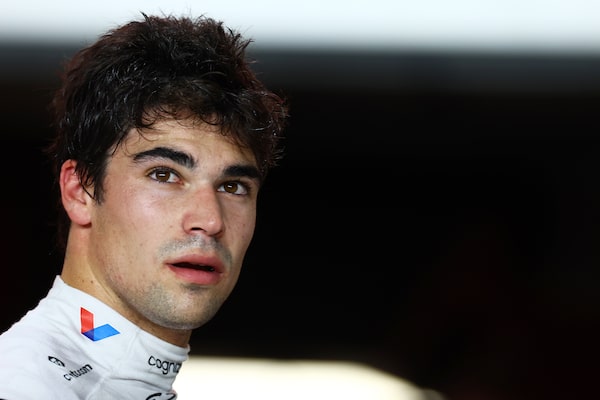
Honda are bringing a confidence upgrade to Montreal, not a horsepower one. That is the unusually narrow brief from Shintaro Orihara, Honda Racing Corporation's trackside general manager and chief engineer, who has set Aston Martin's Canadian Grand Prix target in language designed to manage expectations rather than chase headlines.
"In Montreal, which is Lance's home race, we will focus on enhancing the driveability and our energy management strategy to support the drivers in building more confidence," Orihara said in comments published this week. The choice to lead with Lance Stroll over Fernando Alonso is itself a tell. Honda are explicitly trying to give the home-race driver a car he can commit to.
The theory behind the target is straightforward. "If we can give more confidence to the drivers in entering the corners faster and carrying more speed, then we unlock lap time," Orihara said. On Circuit Gilles-Villeneuve's mix of a long pit straight and slow, kerb-heavy chicanes, that is where the time hides — not in peak horsepower, but in how much you can carry through the slow stuff without lifting.
The technical list lines up with the message. Honda has confirmed battery vibration improvements that first showed in Miami, where Aston Martin scored their first double-finish of the year. The Canadian package will also refine MGU-K delivery accuracy, sharpen torque shaping and rework energy deployment to better suit Montreal's distinctive layout.
What the engineer did not promise is a number. There is no "quantum leap" lap-time figure, no horsepower headline. That is the new 2026 reality, where teams juggle ADUO tier concessions, calorific fuel-flow limits and complex hybrid deployment maps. Round numbers belong on marketing slides. Driveability lives on driver radio.
For Stroll, who arrives in Montreal having spent 2026 fighting a "paid driver" narrative he cannot quite outrun on results alone, this is, at worst, a useful framing. If Honda's package lands and the AMR26 starts to behave on corner entry, the home-race weekend writes itself. If it does not, Aston Martin's eighth round without a point becomes a much louder story than the one Orihara is trying to sell.
The broader case for patience is real. Honda's renewed factory programme was always sold as a multi-year build, not a 2026 title push. But after eight rounds of incremental progress, Orihara's choice to frame the Canada upgrade in terms of "confidence" rather than "performance" is a quietly significant one. It is what an engineer says when the ceiling is still being raised — and when the floor is still being found.