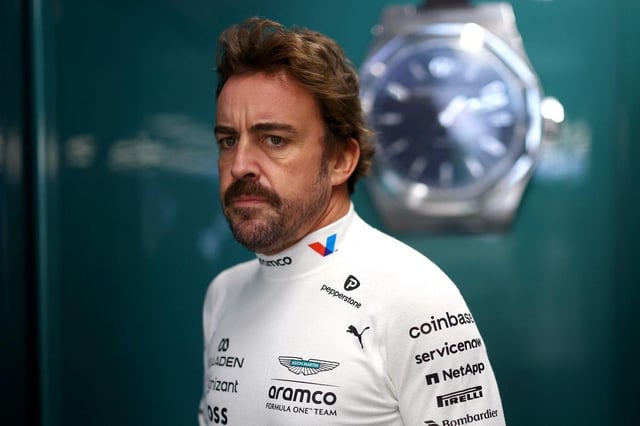
There is now a paper trail for the thing Fernando Alonso has repeated all season. The FIA's new engine ranking has formally placed Honda at the bottom of the 2026 grid — the weakest power unit in Formula 1.
The verdict came through the ADUO process, the Additional Development and Upgrade Opportunities framework the governing body uses to measure power-unit performance and dole out catch-up room. Honda came out last. Autosport noted the outcome "has been obvious from the start of the season" and called it "the least surprising aspect" of the exercise. Red Bull's own engine led the rankings, Mercedes and Ferrari were granted upgrades, and Honda was left with what the report described as limited "room for manoeuvre."
For Aston Martin, the ranking simply made official a frustration that had already spilled out in Barcelona, where Alonso qualified dead last at his home race.
"We knew we have the worst car and the worst engine and we've been very clear in every race so far that we have to work," he said afterwards. There was no spin in his summary: "We have a very poor engine, the worst one. We have very poor energy deployment. We have gearbox problems and aerodynamic problems."
The grind is getting to him. "We repeat the same thing every weekend. It's exhausting," Alonso said. "We're last, we know it, and we have no problem admitting it."
Part of what makes it so draining is that the weakness shifts circuit to circuit — power in Australia, deployment in China, the chassis in Monaco, the gearbox in Miami. "Zero positives from this weekend," he said during the European swing. "We've been racing in very different circuits so far this year. All of them were clear for us in terms of understanding some of our weaknesses." He is pinning the season on one big update: "For the second part of the year, the package that we try to bring all at once is tackling all those problems individually."
Pedro de la Rosa, the team's ambassador, has backed up that the issues are structural rather than cosmetic. He pointed to Monaco, where the car behaved in a way nobody anticipated. "We were expecting to be a bit better here, but we found a very, very severe mid-corner understeer in the low-speed," de la Rosa said, stressing that "it is something more fundamental than the set-up change."

Honda maintains it is closing the gap. Trackside general manager Shintaro Orihara explained earlier in the year that the manufacturer had hauled the car back to Sakura, run it through static testing and attacked the vibration issue at the root. "We found good progress on vibration on the engine's battery side and also we can see some good progress on vibration for the driver," Orihara said.
The open question — the one Autosport put plainly — is what Honda actually does next. The ADUO allowances hand it a development path, but the deficit is genuine and half the year has already gone. Alonso, for now, is left with candour. The car is last, and no one inside Aston Martin is pretending it is anything else.