For most of 2025, McLaren occupied the position every Formula 1 team is built to chase: a reigning world champion in Lando Norris, an Oscar Piastri long-term contract, and back-to-back constructors' titles in the bank. Five rounds into the 2026 regulations the conversation in the paddock has tilted hard. According to a Grid Pulse F1 News analysis circulating this week, the private question is no longer whether McLaren defends its title — it is which driver walks first if the slump becomes permanent.
The technical trigger is the 2026 ruleset itself. Smaller chassis, far more aggressive electrical deployment, a different aerodynamic balance — and a system in which power-unit calibration sits at the very heart of lap time. Mercedes built its 2026 car around its own software stack. McLaren receives Mercedes hardware but does not receive the full optimisation libraries, calibration knowledge or validation mileage that the works team accumulates. In a year when electrical deployment accounts for close to half of a car's total power output, that's not a marginal disadvantage — it is a structural one.
The on-track evidence has been brutally visible. Telemetry comparisons through the opening rounds repeatedly showed Mercedes deploying smoothly and aggressively out of corners while the MCL40 looked uneven and, in the Grid Pulse description, "nervous under acceleration." China produced the bluntest single moment of the year for McLaren: both cars failed to start the grand prix. Not crashes; not strategy mistakes — system failures. Drivers can absorb losing pace. They can't easily absorb losing trust.
That sets up the contractual problem. Piastri's much-celebrated long-term extension was sold publicly as a generational commitment, but Grid Pulse and other paddock sources have noted that performance-escape clauses were quietly written into the agreement. Mark Webber, Piastri's manager, knows better than most that a team rebuild can swallow a driver's prime years. If McLaren can't deliver a title-capable car by the end of 2026, Piastri will have leverage — and the team most often mentioned in those conversations is Red Bull, where Christian Horner has been a public admirer for years.
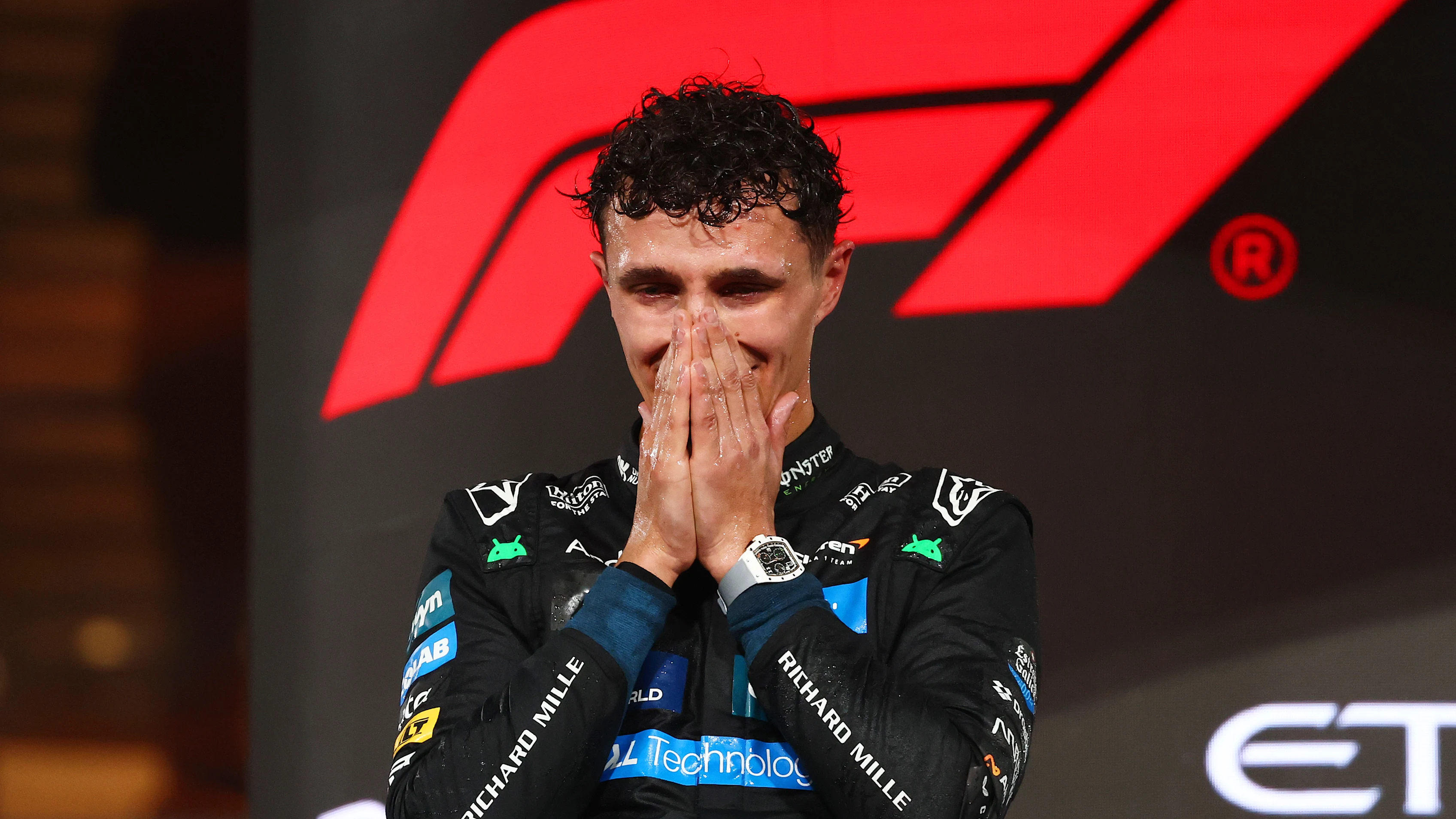
The harder driver to keep, paradoxically, may be the one McLaren just won the championship with. Norris's psychology fundamentally changed in Abu Dhabi 2025. A driver who has won a championship stops accepting a rebuild on faith. The historical pattern is consistent — Alonso, Hamilton, Vettel all left teams in pursuit of competitiveness once their first world title was banked. If George Russell's Mercedes seat ever opens beyond 2026, and if Toto Wolff decides he wants a proven world champion to lead the new engine era, the conversation begins.
The most dangerous risk, the analysis suggests, isn't external. It's internal. McLaren's modern identity is built on equality between its drivers — no overt number one, the so-called papaya rules. That framework holds when both cars win. It frays when both drivers share the same reliability problems, the same compromised strategies and the same development frustrations. The Senna-Prost and Hamilton-Rosberg comparisons get reached for here, but Red Bull 2024 is the more recent and more uncomfortable parallel.
Team principal Andrea Stella has so far said almost nothing about any of this publicly. His only meaningful Canada-related comment was a deliberately bland line that four teams will be separated by very little lap time in Montreal. Whether that silence is calm or recognition that the real conversations are happening elsewhere, McLaren's papaya project is, for the first time in two seasons, openly fragile.