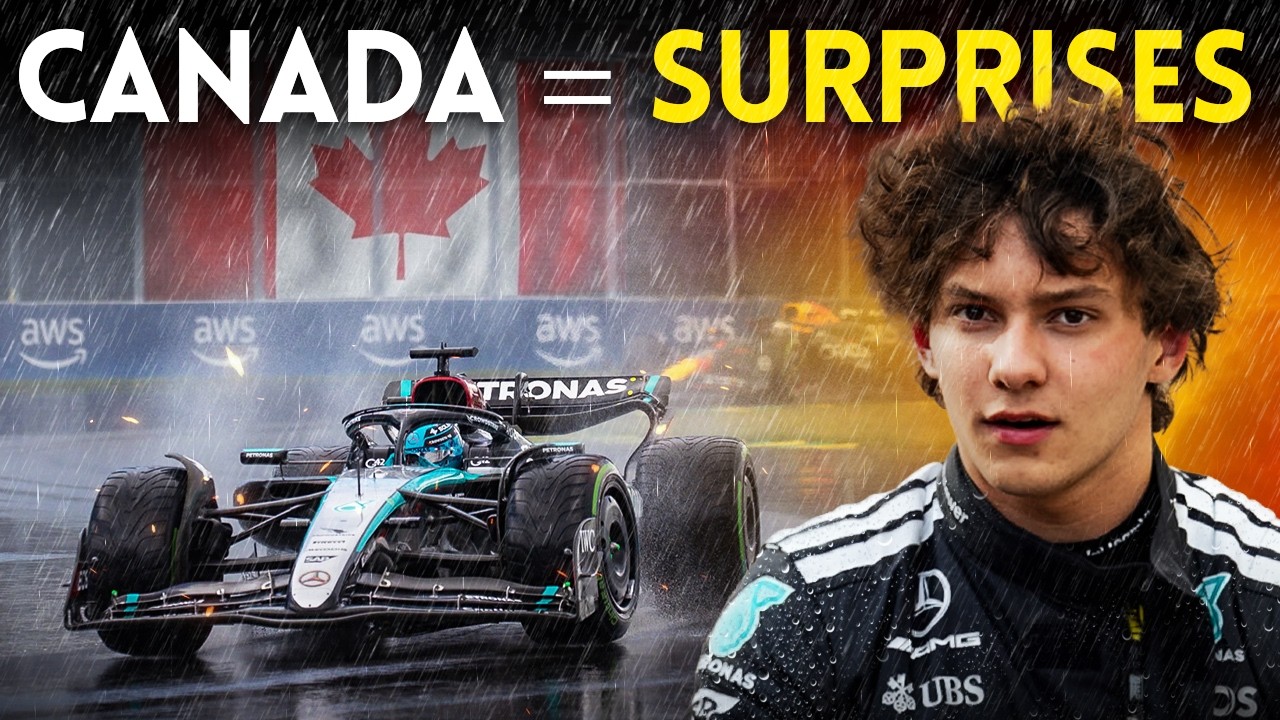
Of all the words a Formula 1 strategist does not want associated with their next race weekend, 'cold', 'sprint' and 'safety car lottery' sit fairly high on the list. The 2026 Canadian Grand Prix is, unfortunately for the strategists, lining up to deliver all three.
The calendar move is the starting point. Canada has been pulled four weeks forward on the 2026 schedule, which has shifted the race out of its traditional summer-warmth slot and into a markedly cooler window. Daytime maximums are forecast in the 16 to 20 degrees Celsius range, with overnight figures expected to drop as low as 4 degrees. Montreal had hail in 2024. This is not a venue that asks before throwing a curveball.
For the engineers, the temperature drop is more than a comfort issue. Generating front-tyre temperature in low-grip conditions is one of the harder problems on the 2026 ground-effect generation cars, and the cars least able to hit the working window in those conditions tend to give their drivers the smallest possible margin for error in the opening laps. Front-axle confidence drops, brake balance migrations become twitchier, and any car that depends on its tyres being deep in their operating window to find lap time will struggle to extract that lap time when the air is at 8 degrees and the track is at 14.
The second variable is the format. Canada is the third sprint round of the 2026 season, which means just one 60-minute practice session before Friday qualifying for the sprint. That is a punishing setup-time budget for any team carrying meaningful upgrades into the weekend, which is most of the grid. Mercedes have a substantial package said to include front wing, redesigned suspension covers, underbody floor work and a lighter gearbox. McLaren are bringing roughly the remaining 40 percent of their Miami-era development cycle, centred on a new front wing. Ferrari, for their part, are reported to be saving their headline visual move for Monaco — a special livery for Charles Leclerc — rather than a parts package for Montreal.
The third variable is the safety car. Circuit Gilles Villeneuve has a historical safety car appearance rate of roughly 70 percent, with virtual safety cars on top at more than 40 percent. Both numbers are above the season average. An early intervention will lock teams into long second stints. A late intervention will trigger pit-stop stacks and rearrange the running order on pure track position. The Wall of Champions, scene of the famous 1999 Hill-Schumacher-Villeneuve trio of retirements, still does its job. Bumps into turns 8 and 10 still upset car platforms. Kerbs at turns 3 and 4 still rip up race weekends for anyone who treats them with less than full respect.
Layered on top of all of that is a 50 percent chance of rain on Sunday, with a long memory in this venue going back to the 2011 race in which Jenson Button came from last to first in what became the longest race in F1 history at over four hours. The modern three-hour cap removes the all-day-race option, but it does nothing to prevent the conditions from turning a Sunday afternoon into mayhem.
There is a competitive narrative wrapped into the chaos. Andrea Kimi Antonelli took his maiden F1 podium at this venue last year. A Sunday win in 2026 would give him a fourth consecutive feature-race victory in the championship he is currently leading the conversation in. A cold-weather sprint weekend with a 70 percent safety car rate is, paradoxically, exactly the kind of environment in which a teenage prodigy with strong race pace can extend his run.

The headline summary writes itself. Montreal is going to be busy. Montreal is going to be cold. Montreal is going to have at least one safety car, and possibly several. Pit-wall coffee orders this weekend are likely to be significantly larger than usual.