Drivers have spent the whole of 2026 complaining about tyre pressures. A solution reached the table before the summer break, and the teams declined to back it.
According to Jon Noble at The Race, Pirelli tabled a rule change that would have allowed it to reduce minimum pressures for the second half of the season, with the Dutch Grand Prix a realistic starting point. F1's governance requires a super majority of team support for that kind of in-season change. The votes were not there.
The reason the pressures are high in the first place traces back to active aero rather than to Pirelli. A car stuck in corner mode at straight-line speed would put extreme vertical load through the tyres, so the elevated pressures - often 3-4psi above 2025 depending on the layout - exist as insurance against a wing that fails to switch. Pirelli's proposal attacked the failure case: a car unable to select straight mode would get the black and orange flag after five laps, pit, and retire if the fault could not be cured.
The FIA reportedly saw no problem with the mechanism. Objections came from the teams. Some did not want a mid-season pressure change reshuffling the competitive picture. Others did not want a points finish erased automatically by an active aero fault they might have driven around.
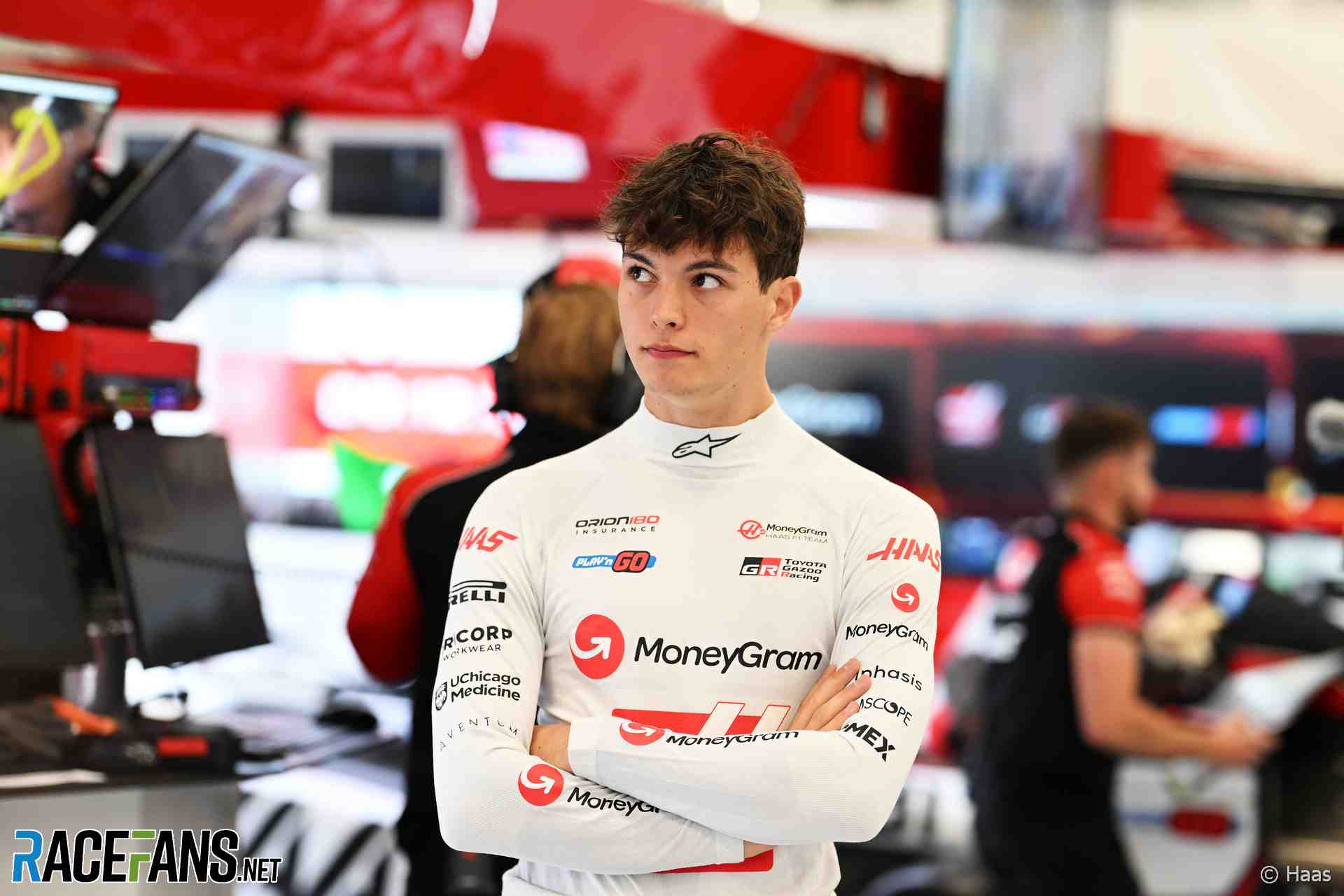
What the pressures do to the car has not been a subtle complaint. Ollie Bearman coined the season's shorthand at the Barcelona Grand Prix in June, on a Friday with 52C track temperatures.
"It's terrible, to be honest," the Haas driver said. "We have so much air in these tyres now, and it's just an absolute nightmare. The deg is huge, a lot of overheating over a single lap."
He followed it with the line that stuck: "We have so much power under the right foot and so little grip with those huge balloons as tyres that we have."

Lewis Hamilton described the same weekend as "probably the lowest grip that we've had here in, I would say, any year that I've been here. The tyres only last one lap". Nico Hulkenberg forecast "a deg fest on Sunday" and noted that in 50C track temperatures nothing feels good in any car.
Pirelli's chief engineer Simone Berra, who stood to gain from the change, was unbothered by the vote going against it.
"The majority decided to keep the higher pressure and for us, it's fine," Berra told The Race. "We have explained multiple times that the reason [for the high pressures] is the SM [straight mode] condition, which is not happening so often. It is just a matter for us to define which procedure to take into account [when picking the tyre pressures], and we are going to take the worst-case scenario."
Asked what the pressures could have been without that worst case to design around, he quantified what was refused.

"It can be significant," Berra said. "It depends on the circuit, basically. It can be a range of 1-3psi, more or less, on the front and rear axle. But it would be possible to lower more the rear axle."
Pirelli does still adjust within the existing framework - it took 1psi off the Barcelona minimums front and rear after Friday data showed the tyres running past their expected stabilised figures. That is trimming, not the structural shift Berra outlined.
Which leaves the position for the rest of the year, and probably 2027 too: locking up on entry, overheating within a lap, and tyres that will not switch on when it is cold. The change the drivers wanted was available. The teams weighed it against their own results and passed.