Another weekend, another crash for Charles Leclerc — and another row over why. The Ferrari driver buried his car in the barrier on his opening run in Q3 at Barcelona and will line up only tenth for the Spanish Grand Prix. It was his third crash in three competitive sessions and, depending on how you count Miami, his fourth incident in four weekends.
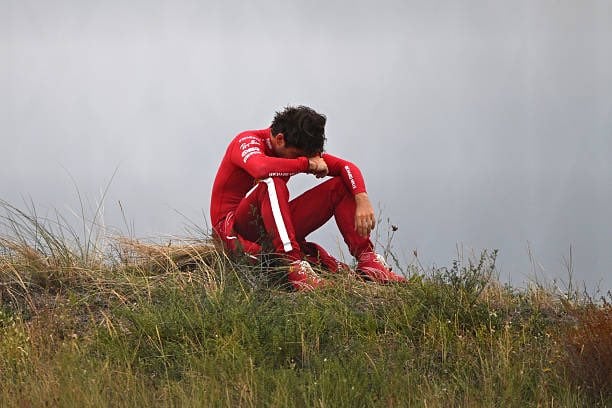
The accident came at turn four, a place that almost never bites in qualifying, and the impact was heavy enough to summon the medical car. Leclerc climbed out unhurt but inconsolable, and made no attempt to deflect.
"I feel ashamed of not putting everything together on what was a very positive weekend so far," he said. "I should be starting higher up, and I don't, because of a mistake of mine... I feel ashamed for disappointing so many people who are supporting us."
From there, the explanations diverge sharply.
Peter Windsor traced the shunt back to a setup gamble — Leclerc switching to the same Brembo brake specification that Hamilton uses. "I felt personally it was going to be a mistake for [Leclerc] to start playing around with brake materials, given the way he drives compared with Lewis," Windsor said. "And at the risk of saying so, it proved." The extra stopping power, he argued, was nudging Leclerc into later, straighter braking and a wider entry — "the root cause," in his view, even without an outright brake failure.
The P1 with Matt & Tommy podcast rejected that reading outright. "It's nothing to do with the brakes," one host insisted. "It's not like he locked up and went in the wall. It was all about power delivery and how eager he was on the throttle... there's nothing to be gained from Brembo, because it was not an under-braking mistake." The pattern, they said, is the real worry: "No other top driver crashes anywhere near as much as he does."
Driver coach Martin, of lowerlaptime, called it a tactical lapse, not a mechanical one. He counted three mistakes stacked together: an early turn-in, a failure to accept it, then a stab at the throttle across marbles and dust. What rankled most was the timing — the first run in Q3, with a second lap in hand. "The car's quick, it's first run in Q3 — get a time on the board," he said, before pointing to the bigger picture. "Lewis is, in some ways, the lead. He's leading Ferrari right now."

That idea — a reborn Hamilton crawling into his team-mate's head — surfaced everywhere. Hamilton out-qualified Leclerc by eight places and came close to pole; Leclerc, at his adopted home race, finished in the wall. P1's hosts saw the link. "Hamilton being able to get more out of the car is making [Leclerc] push even more," one said, though they stressed it was "a multitude of things," with Leclerc ultimately "over-driving the car."
A flicker of hope remains. Martin, for all his criticism, rates Leclerc's race craft enough to back a comeback: even from tenth, he believes the Ferrari's gentleness on its front tyres could let Leclerc make something of a race built around heavy degradation. The catch is the one that keeps recurring — he first has to bring a rebuilt car home.