Points in each of the last three rounds is a modest headline, but for a manufacturer running its own Formula 1 power unit for the first time it is the shape of a project working. Audi will not push that any harder in 2026. Racing director Allan McNish has confirmed the engine is now fixed until next season.
The question Motorsport.com put to him was simply when the next powertrain update lands. "It'll be next year," McNish said.
Nothing about that is a technical surrender. It is an accounting one, imposed by a cost cap that makes engine and chassis spending compete for the same money.
"Everybody has got this trade-off between when you're bringing upgrades - chassis and PU - and also where you spend your money," McNish explained. "Because you can't spend everything at one time, because then you don't have anything to fight with later. So it's got to be a managed expectation, and not just over one season, but multiple seasons as well."
Audi's one power unit change of the year came at Barcelona, drawn from its ADUO allowance. McNish characterised it as the small, cheap fix, with the substantial work deliberately deferred.
"We brought something in Barcelona straight away, which was some small adaption, and that worked well, that helped us on our way," he said. "And then I would say the bigger parts are for 2027. So we will not see anything big on the power unit until then. [...] It's more hardware than anything, and that's not a quick thing to change."
On the size of the 2027 step, he refused to be drawn, joking: "That's '27. Give us a break. We're only halfway through '26, I need my cup of tea first."

Nico Hulkenberg's account of what actually changed at Barcelona is a useful corrective to anyone expecting a horsepower story. Speaking at Spa-Francorchamps, he described a driveability gain measured in fractions.
"It is about what you request on the pedal, but how the PU responds, how the torque delivery is. Does it surge, is it consistent, is it smooth? It is very fine stuff," Hulkenberg said. "It happens in a blink of an eye, less than a tenth on a corner exit. But with a car on the limit, over the limit, all these things matter a lot."
His image for driving without it was memorable enough to stick: "If you then have driveability issues on top of that, it is like trying to hit a curveball."
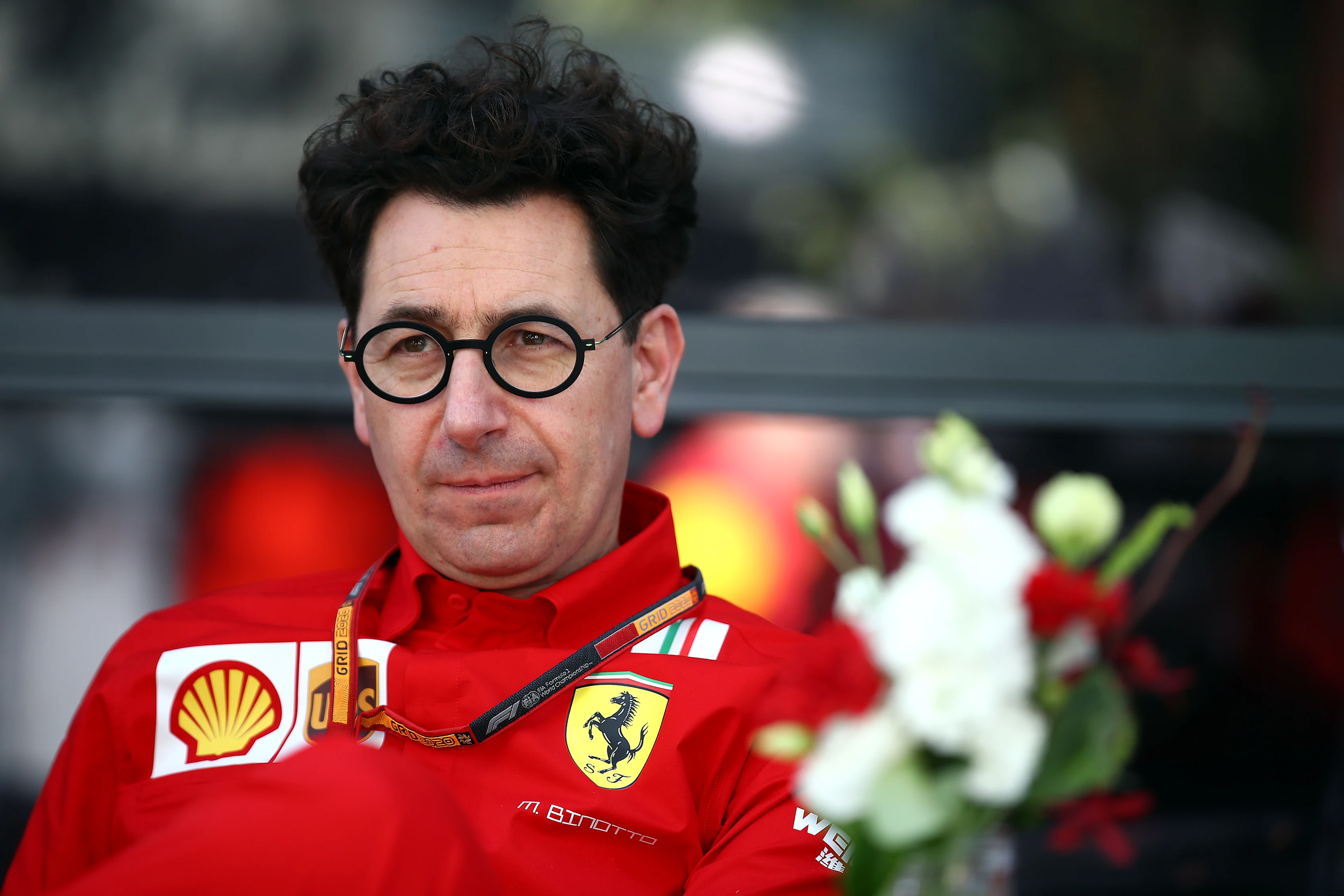
Team boss Mattia Binotto's concern sits one level above all of this. ADUO grants development room to manufacturers judged to be behind, and that judgement is made from on-track performance - which Binotto thinks can be gamed by a team whose advantage lies in the chassis.
"In my opinion, the limit has been that it has exclusively measured performance on the track. A car with an overall advantage can afford not to fully exploit the potential of its power unit," he said, offering a specific hypothetical: "It's possible, for example, that Mercedes had an engine with superior potential but had no need to push it to the limit because it already had an advantage thanks to the car."
He was explicit that this is not an accusation aimed at the governing body. "On the results, I'm not questioning the work done by the FIA. They have all the tools and data necessary to make their assessments."
The complaint is about purpose. "When it was first discussed, the concept was that of a sort of safety net," Binotto said. "This wasn't the original intent [...] the goal was to help those who were actually falling behind, not to create situations in which the true potential of a power unit might be difficult to assess."
From the outside, Audi looks less like a team rationing itself and more like one worth joining. Guenther Steiner, talking about where drivers might go in 2028, put it plainly.
"There's a lot of interest from drivers to go to Audi for 2028," Steiner said. "That's quite an interesting place because they're making good progress. It seems to be on track, what they are doing."
That is the tension worth watching through the rest of 2026. McNish is protecting a multi-year budget position. Binotto is arguing the multi-year framework itself is imprecise. Audi has to live with both answers until the 2027 hardware arrives.