
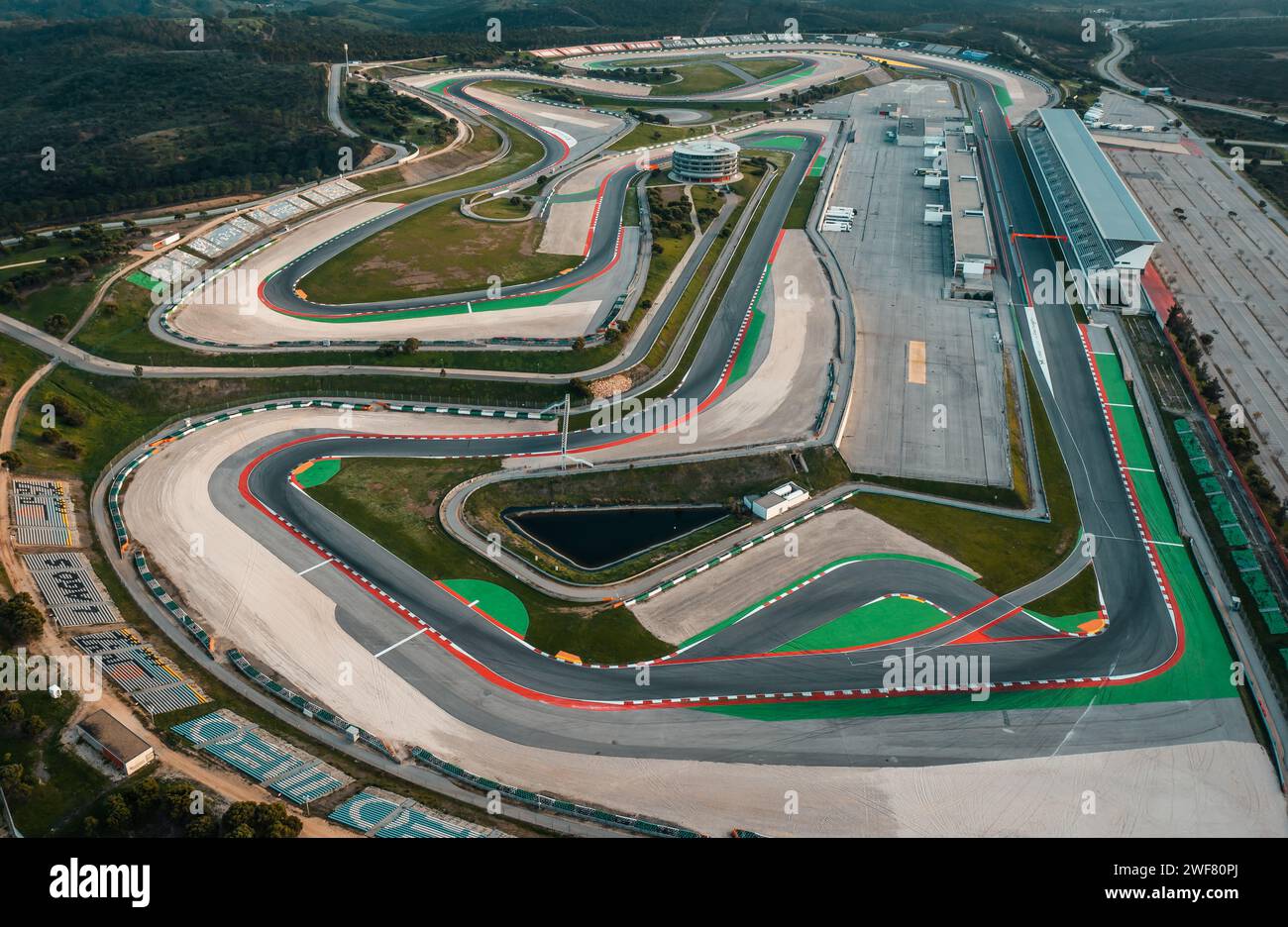
Autódromo Internacional do Algarve
Rising from the undulating hills of southern Portugal's Algarve region, the Autódromo Internacional do Algarve stands as one of modern motorsport's most distinctive and challenging racing venues. Better known to many as the Portimão Circuit, this 4.653-kilometer marvel has earned a reputation that extends far beyond its relatively recent addition to the Formula 1 calendar, captivating drivers and fans alike with its unique blend of technical complexity and raw speed. Located in Portimão within Portugal's picturesque Algarve region, the circuit represents a bold architectural statement in track design. Unlike many contemporary racing facilities that prioritize flat, predictable layouts, the Autódromo Internacional do Algarve embraces the natural topography of its surroundings, creating what many describe as a motorsport rollercoaster. The track's defining characteristic lies in its dramatic elevation changes, which create a series of blind crests and sweeping undulations that challenge even the most experienced drivers. The circuit's 4.653-kilometer layout winds through either 15 or 16 corners depending on classification, each presenting unique challenges amplified by the track's constantly changing elevation. These corners range from high-speed sweepers that flow naturally with the landscape's contours to more technical sections that demand precise braking and throttle control. The combination of fast-flowing sections with challenging technical elements creates a venue that tests every aspect of both machine and driver performance, from aerodynamic efficiency to suspension setup and driving skill. What truly sets the Algarve International Circuit apart from many of its contemporaries is its ability to promote competitive racing. The track's design philosophy emphasizes overtaking opportunities, with multiple racing lines available through many corners and strategic points where drivers can mount attacks on their rivals. This characteristic has made it particularly popular among racing drivers, who often praise the circuit for its pure driving challenge and the opportunities it provides for wheel-to-wheel combat. The circuit's fast, flowing nature creates a unique driving experience that has quickly established it as a favorite among Formula 1 drivers. The blind crests add an element of bravery to high-speed driving, while the elevation changes create complex aerodynamic challenges that push engineering teams to find optimal setups. The combination of high-speed straights with the circuit's technical corners means that successful lap times require a delicate balance between aerodynamic efficiency and mechanical grip. When Formula 1 finally arrived at Portimão, it brought with it the establishment of new benchmarks for speed and performance. Lewis Hamilton's lap record of 1:18.750 stands as a testament to both the circuit's challenging nature and the incredible speeds achievable by modern Formula 1 machinery on this demanding layout. This record represents the fastest completion of the circuit's 66-lap Formula 1 race distance configuration, showcasing the precision required to master the track's complex rhythm. The surface characteristics of the Autódromo Internacional do Algarve contribute significantly to its racing appeal. The track provides good grip levels while still allowing for multiple racing lines, enabling drivers to explore different approaches to corner combinations and creating opportunities for strategic overtaking moves. The circuit's design ensures that tire management becomes a crucial factor, particularly over longer race distances, adding another layer of complexity to race strategy. Beyond its technical merits, the circuit's location in the Algarve region provides a stunning backdrop for motorsport. The facility represents significant investment in Portuguese motorsport infrastructure and has helped establish the country as a serious player in the international racing calendar. The venue's ability to attract top-tier motorsport events has brought increased recognition to Portuguese racing and created new opportunities for local motorsport development. The track's reputation extends beyond Formula 1, hosting various international racing series that take advantage of its challenging layout and excellent facilities. Its design philosophy, which prioritizes driver challenge and racing spectacle over pure safety margins, represents a refreshing approach in an era where many new circuits are criticized for being overly sanitized or processional. Current status sees the Autódromo Internacional do Algarve maintaining its position as one of motorsport's most respected modern circuits. The venue continues to host significant racing events, with its inclusion in the Formula 1 calendar marking a particular high point in its relatively short history. The circuit's ability to provide exciting racing while maintaining the highest safety standards has established it as a model for future track development projects worldwide. The lasting appeal of the Algarve International Circuit lies in its successful combination of natural terrain utilization with purposeful design philosophy. Rather than fighting against the landscape, the track works with the existing topography to create a venue that feels organic while providing the technical challenges that define great racing circuits. This approach has created a facility that stands as both a testament to modern track design capabilities and a throwback to the more demanding circuits of motorsport's golden eras.