
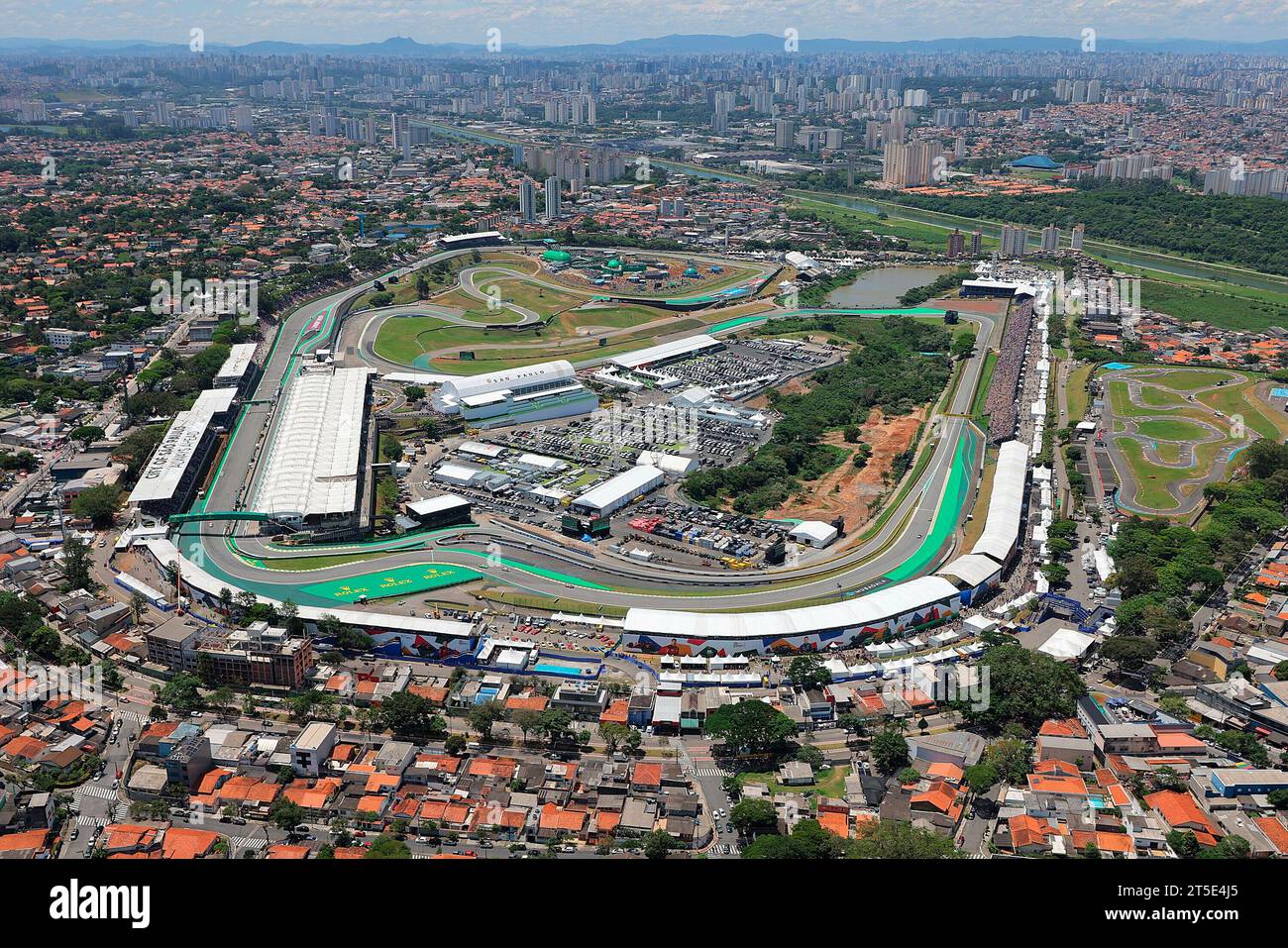
Autódromo José Carlos Pace
Nestled in a natural amphitheater on the outskirts of São Paulo, Brazil's most famous racing circuit stands as a testament to both motorsport passion and national pride. The Autódromo José Carlos Pace, universally known as Interlagos, represents one of Formula 1's most challenging and atmospheric venues, where unpredictable weather, passionate crowds, and a demanding track layout combine to create some of the sport's most memorable moments. The circuit's origins trace back to the late 1930s, when construction began on what would initially open in 1940 as the "Autódromo de Interlagos" – a dirt track that reflected the ambitious vision of Brazilian motorsport enthusiasts. The name "Interlagos," meaning "between the lakes," perfectly captured the venue's geographical setting. During the late 1940s, the facility underwent a significant transformation when the original dirt surface was replaced with asphalt, marking the beginning of its evolution into a world-class racing venue. Like many circuits constructed in the pre-World War II era, Interlagos was designed with banked corners that would become one of its defining characteristics. The original layout featured a natural bowl configuration with a six-turn counter-clockwise oval measuring 3.214 kilometers, complemented by a lengthy infield section that added technical complexity to what might otherwise have been a simple speedway. Between 1957 and the early 1970s, drivers would begin their laps on what essentially amounted to a half-oval, taking advantage of the banking before diving into the more technical sections of the circuit. The venue's entry into Formula 1 came in the early 1970s, with its debut race taking place in 1972, initially as a non-championship event. However, it wasn't long before Interlagos established itself as a permanent fixture on the Formula 1 calendar, becoming the home of the Brazilian Grand Prix and cementing Brazil's position as a major force in international motorsport. In 1985, the circuit received its current official designation when it was renamed to honor José Carlos Pace, the Brazilian Formula 1 driver who tragically died in a plane crash in 1977. This renaming represented more than just a memorial gesture – Pace had been one of Brazil's pioneering F1 drivers, and the circuit became his final resting place, creating a deeply personal connection between the venue and Brazilian motorsport heritage. Today's Interlagos measures 4.309 kilometers and challenges drivers with 71 demanding laps that test every aspect of their skill and machinery. The current lap record of 1:10.540, set by Valtteri Bottas, demonstrates the incredible speeds achievable on this deceptively challenging circuit. The track's counter-clockwise direction, unusual in Formula 1, places unique physical demands on drivers, while the elevation changes throughout the lap create both spectacular viewing opportunities and significant aerodynamic challenges for the cars. The circuit's most distinctive feature remains its natural bowl setting, which not only provides excellent sightlines for the 60,000-capacity crowd but also creates a unique microclimate that can dramatically affect racing conditions. Weather at Interlagos is notoriously unpredictable, with sudden rain showers capable of transforming race strategies in minutes. This meteorological volatility has contributed to some of Formula 1's most dramatic moments, where races have been won and lost based on split-second decisions about tire strategies and track conditions. The banking that characterizes several corners at Interlagos provides multiple racing lines and creates excellent overtaking opportunities, particularly important in an era where passing has become increasingly difficult at many modern circuits. These banked sections, combined with the track's flowing layout, reward brave drivers willing to commit to alternative lines while punishing those who make even minor errors in judgment. Interlagos has earned a reputation as the venue for some of Formula 1's most emotional and significant races. The passionate Brazilian crowd, combined with the circuit's challenging characteristics, has created an atmosphere unlike anywhere else in the sport. The venue has witnessed championship celebrations, heartbreaking defeats, and career-defining performances that have become part of Formula 1 folklore. The circuit's surface characteristics present their own unique challenges, with the asphalt offering good grip levels while remaining demanding enough to separate the very best drivers from the rest of the field. The combination of high-speed sections, technical corners, and significant elevation changes means that car setup becomes crucial, with teams needing to find the perfect balance between straight-line speed and cornering performance. Beyond Formula 1, Interlagos serves as Brazil's premier motorsport venue, hosting various national and international racing series throughout the year. The facility represents not just a racing circuit but a cultural institution that embodies Brazil's deep connection to motorsport and its production of world-class racing talent. Today, the Autódromo José Carlos Pace continues to evolve while maintaining its essential character, remaining one of Formula 1's most beloved venues where history, passion, and pure racing excitement converge to create an experience that defines what makes motorsport truly special.