
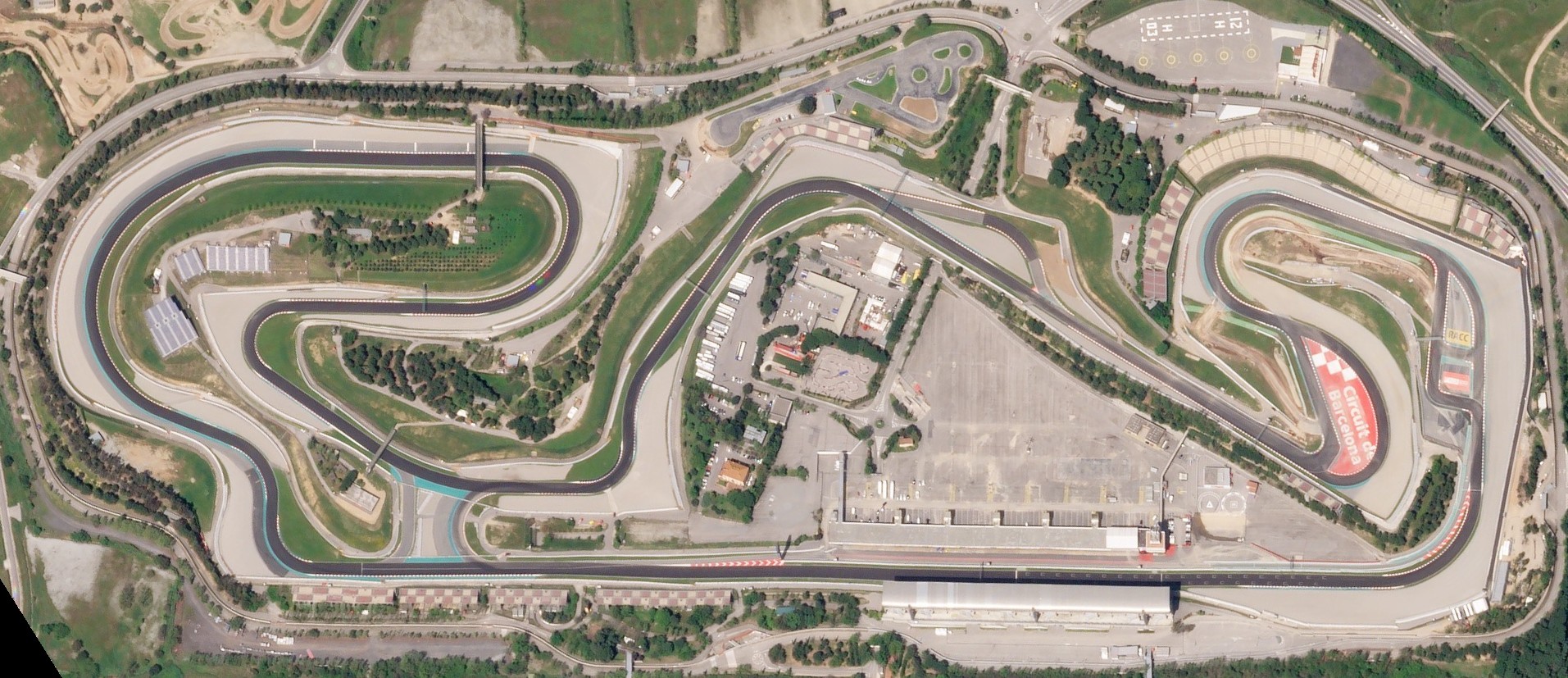
Circuit de Barcelona-Catalunya
Nestled in the hills of Montmeló, just north of Barcelona, lies one of Europe's most demanding and technically challenging racing circuits. The Circuit de Barcelona-Catalunya has evolved from hosting its first Grand Prix in 1991 to becoming an indispensable fixture in the Formula 1 calendar and one of the sport's most crucial testing venues. Measuring 4.657 kilometers in length, this Spanish motorsport facility has earned its reputation through a combination of fast, flowing corners and technical sections that thoroughly test both driver skill and car performance. The track's demanding layout features long straights that challenge aerodynamic efficiency while rewarding pure power, seamlessly transitioning into complex corner sequences that require precision and commitment. This unique blend of characteristics has made the circuit a favorite among engineers and drivers alike, as it provides comprehensive data about a car's capabilities across multiple performance parameters. The venue's significance extends far beyond its role as the host of the Spanish Grand Prix. Due to its demanding nature and strategic location, the Circuit de Barcelona-Catalunya has long served as Formula 1's primary testing ground. Teams regularly descend upon the facility during the off-season and throughout the racing calendar to develop their cars, gather crucial setup data, and prepare for the challenges that lie ahead. This constant activity has transformed the circuit into one of Europe's busiest tracks, with high-profile rounds of various racing series complementing its Formula 1 duties. What sets this circuit apart from many of its contemporaries is its technical complexity. The track features a sophisticated mix of corner types that demand different approaches and skill sets from drivers. Fast, sweeping sections test aerodynamic balance and driver courage, while tighter technical areas reward precision and mechanical grip. This variety ensures that lap times are determined not by a single dominant factor, but by the overall harmony between car, setup, and driver capability. The circuit's challenging nature is perhaps best illustrated by its current lap record of 1:16.330, set by Max Verstappen during his dominant period in Formula 1. This benchmark represents the pinnacle of modern F1 performance around the 66-lap Spanish Grand Prix distance, showcasing just how far both car technology and driver skill have evolved since the circuit first welcomed Formula 1 in 1991. Interestingly, despite its reputation for technical difficulty, the Circuit de Barcelona-Catalunya is among the least demanding tracks for braking systems in Formula 1. This characteristic allows teams to focus their attention on other performance areas while still subjecting their cars to a comprehensive workout across multiple disciplines. The reduced brake wear also enables longer practice sessions during testing, maximizing the valuable track time that teams crave. The Spanish Grand Prix itself has a rich but nomadic history that makes the circuit's current status all the more significant. Before finding its permanent home in Catalonia, the race lived a wandering existence throughout much of its history. Four different venues hosted the Spanish Grand Prix between the 1950s and 1980s, creating an inconsistent and often chaotic chapter in the race's development. These early years were characterized by frequent venue changes and races that were often marked by controversy and unpredictability. The establishment of the Circuit de Barcelona-Catalunya brought much-needed stability to the Spanish Grand Prix while elevating the event's profile significantly. Since taking over hosting duties, the venue has provided consistently high-quality racing and has become known for producing strategic battles that often extend deep into the race distance. The circuit's layout naturally creates opportunities for different tactical approaches, whether teams opt for aggressive early strategies or choose to play the long game with tire management and late-race pushes. With a capacity of 140,700 spectators, the circuit can accommodate massive crowds during major events, particularly the Spanish Grand Prix weekend when Formula 1 fever grips the region. The passionate Spanish fans create an electric atmosphere that adds another dimension to the racing spectacle, with grandstands positioned to offer excellent views of the track's key sections and overtaking zones. Today, the Circuit de Barcelona-Catalunya stands as a testament to modern motorsport facility design and operation. Its dual role as both a premier racing venue and a crucial testing facility ensures year-round activity and maintains its position at the heart of European motorsport. The circuit continues to challenge drivers and teams while providing fans with thrilling racing action, cementing its status as an essential component of Formula 1's diverse and demanding calendar.