
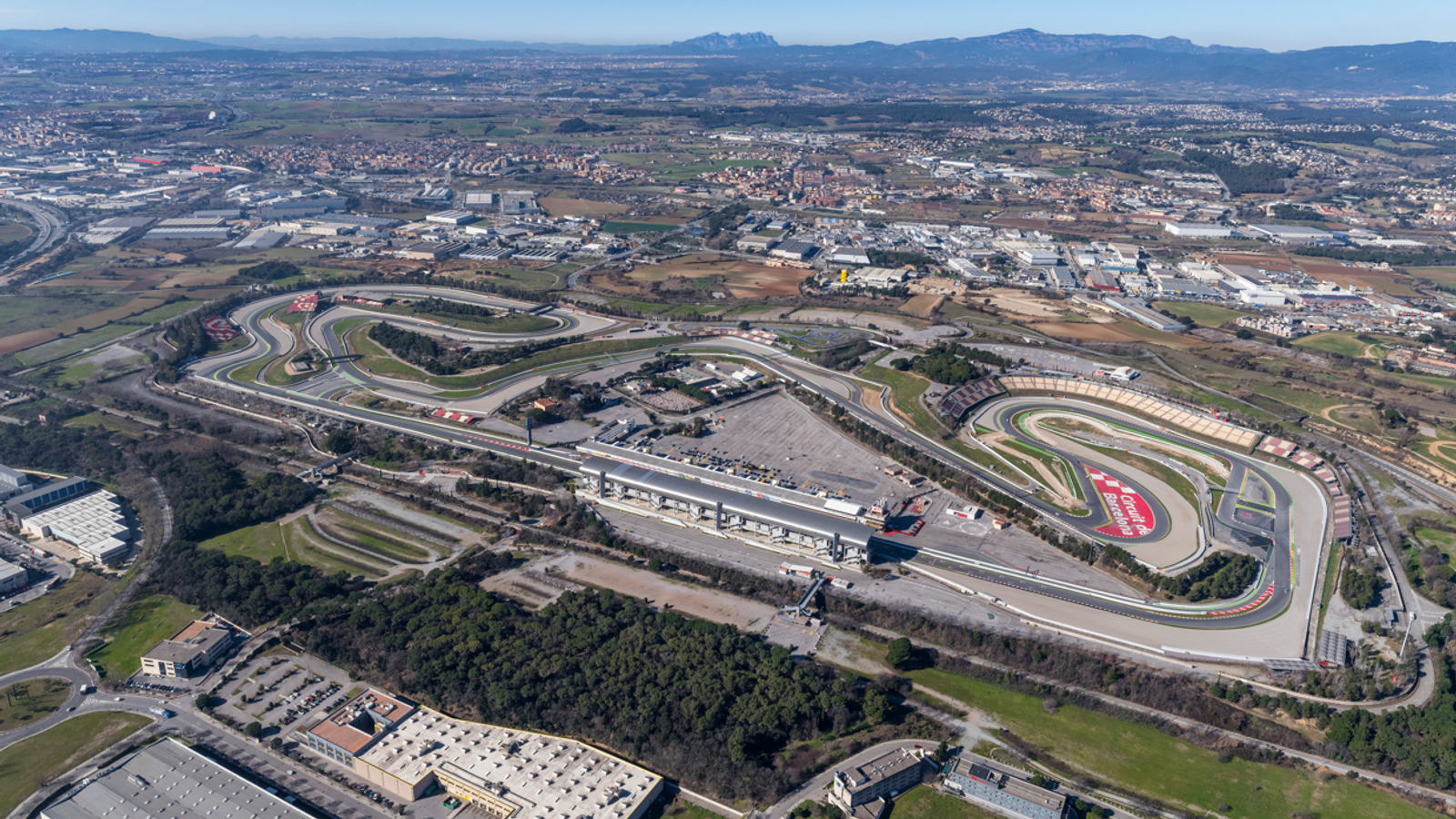
Circuit De Espana
Nestled in the heart of Spain's capital region, Circuit de España represents one of Formula 1's most technically demanding venues, challenging drivers with its intricate blend of high-speed sections and precision corners across 5.416 kilometers of tarmac. This Madrid-based circuit has carved out its place in motorsport history as a venue where racecraft and mechanical precision converge in spectacular fashion. The track's layout presents a formidable test for both man and machine, weaving through varied terrain that showcases the engineering excellence required in modern Formula 1. At 5.416 kilometers in length, Circuit de España ranks among the longer circuits on the F1 calendar, with races contested over 57 grueling laps that push drivers and their machinery to the absolute limit. The extended race distance of nearly 309 kilometers ensures that strategy, tire management, and reliability play crucial roles in determining race outcomes. What immediately strikes visitors to Circuit de España is the circuit's technical complexity. The track features a sophisticated combination of corner types that test every aspect of a driver's skill set. Fast, flowing sections reward bravery and commitment, while tight technical complexes demand precision and patience. The circuit's design philosophy emphasizes the importance of finding the perfect balance between aerodynamic efficiency for the straights and mechanical grip for the more technical portions. The track surface characteristics at Circuit de España present their own unique challenges. Like many modern circuits, the tarmac composition and grip levels can vary significantly throughout a race weekend, particularly as rubber builds up on the racing line. These evolving conditions often create strategic opportunities, as teams must carefully manage tire degradation across the 57-lap race distance while seeking the optimal moments to capitalize on fresh rubber. Elevation changes throughout the circuit add another layer of complexity to an already challenging venue. These undulations not only test suspension setups but also create opportunities for dramatic overtaking maneuvers as cars crest rises or dive into valleys. The varying gradients affect aerodynamic performance and braking stability, requiring teams to find delicate compromises in their car setups. Several corners have become legendary among drivers and fans alike for their technical demands and overtaking opportunities. The circuit features a mix of high-speed curves that reward aerodynamic efficiency and slower, more technical sections where mechanical grip and driver skill prove decisive. These contrasting demands often separate the championship contenders from the rest of the field, as only the most complete packages can excel across all sections of the track. The main straight provides one of the circuit's primary overtaking opportunities, with DRS zones strategically placed to encourage wheel-to-wheel combat. However, successful overtaking at Circuit de España requires more than just straight-line speed; positioning through the preceding corners and exit speed prove equally crucial in setting up passing maneuvers. Circuit de España's location near Madrid brings unique atmospheric conditions that can significantly impact race proceedings. The continental climate means temperatures can vary dramatically throughout race weekends, affecting tire performance and aerodynamic efficiency. Wind conditions, particularly relevant given some of the circuit's more exposed sections, can also play a crucial role in lap times and race strategy. The facility itself represents modern motorsport venue design at its finest. Spectator areas provide excellent sightlines across multiple sections of the track, allowing fans to witness the full spectrum of challenges the circuit presents. The paddock and pit facilities meet the exacting standards required for Formula 1, with state-of-the-art garages and support facilities that enable teams to operate at peak efficiency. From a strategic perspective, Circuit de España often produces races where tire strategy plays a pivotal role. The 57-lap race distance, combined with the track's demanding nature, typically requires at least one pit stop, though varying strategies have led to dramatic tactical battles. The circuit's characteristics mean that track position remains valuable, but strategic boldness can be rewarded when executed perfectly. The circuit has witnessed numerous memorable moments that have shaped Formula 1 history. The combination of technical demands and strategic complexity has produced races featuring dramatic weather changes, strategic masterclasses, and breathtaking displays of racecraft. These moments have helped establish Circuit de España's reputation as a venue where championships can be won or lost. Weather conditions at the Madrid venue can change rapidly, adding an element of unpredictability that has produced some of the most dramatic races in recent memory. When rain arrives, the circuit's technical nature becomes even more pronounced, separating drivers with exceptional wet-weather skills from their competitors. Currently, Circuit de España continues to play a vital role in the Formula 1 calendar, hosting events that consistently deliver compelling racing action. The venue's challenging nature ensures that it remains a favorite among drivers who appreciate its technical demands, while fans value the strategic complexity that often leads to unpredictable race outcomes. The circuit's position within the broader Spanish motorsport landscape reflects the country's growing influence in international racing. As a showcase venue in the nation's capital region, Circuit de España serves not only as a Formula 1 destination but as a symbol of Spain's commitment to motorsport excellence at the highest level.