Aston Martin turned up to 2026 believing podiums were on the menu. Instead, Adrian Newey's debut car for the new regulations has spent the year loitering near the back — and the closer people look, the more they blame the chassis rather than the Honda engine behind it.
The easy story for a while was the power unit. Honda's 2026 engine has been ranked among the grid's weakest, and Aston has struggled with it in plain sight. Yet on Peter Windsor's YouTube channel, former race engineer Mark Slade made the case that the blame is split down the middle. According to people close to the team, Windsor relayed, the engine accounts for "about 50% of the problem" — and "the other 50% seems to be the car."
Slade's argument comes down to ride height. His reading is that Newey studied the 2026 rules and opted to run the rear of the car very high — the aggressive "rake" approach Red Bull exploited in the last ground-effect generation. "Adrian read the rules and decided that he wanted to go down that route again," Slade said. But the FIA drafted these regulations expressly to stop teams flicking dirty air away from the floor, and a tall rear ride height leaves a car much more exposed when that turbulent air gets pulled underneath.
The upshot, Slade said, is a floor that simply never fires up. "The car designed around running a higher rear height just isn't working, because the floor isn't working properly because of the ingestion of dirty air from the outside," he explained. Rivals began low at the rear and are edging it upward as they master the airflow; Aston attacked from the other direction and is now boxed in. Slade put it down to a recognisable Newey habit: "He will come in and say, 'I've looked at the rules and I think the ultimate fastest car will have this concept. So that's how we're going to start'" — trusting the aero group to iron out the drawbacks afterwards. Long ago at McLaren that gamble paid off. Not this time, in Slade's view.
The verdict from inside the garage is no rosier. Chief trackside engineer Mike Krack declined to blame one part. "I think it's everything. Yeah, I think we need to improve," he conceded. "If it was only one thing, it would be quite easy." Following a Spanish Grand Prix in which both cars qualified almost four seconds off the pace, Krack admitted the deficit felt unreal: "When you are between three and four seconds off, you think you are driving in a different category."
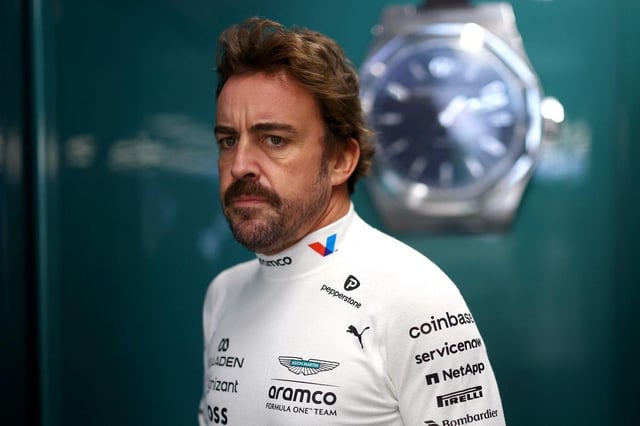
The drivers are done being patient. Fernando Alonso, out alongside Lance Stroll before half-distance in Barcelona, called the AMR26 the worst car-and-engine package of his lengthy career. Outside observers are no gentler. The Formula Duck channel branded Aston's campaign "embarrassing and borderline offensive," suggesting even a thorough B-spec might only lift the team to Williams' level.
For now Aston has parked trackside upgrades, banking everything on a major redesign that Windsor says is already in progress; nothing significant is due before the Belgian Grand Prix. Whether that overhaul abandons Newey's rake gamble or leans harder into it will shape the rest of 2026 — and the reputation of the priciest design hire in the sport.