
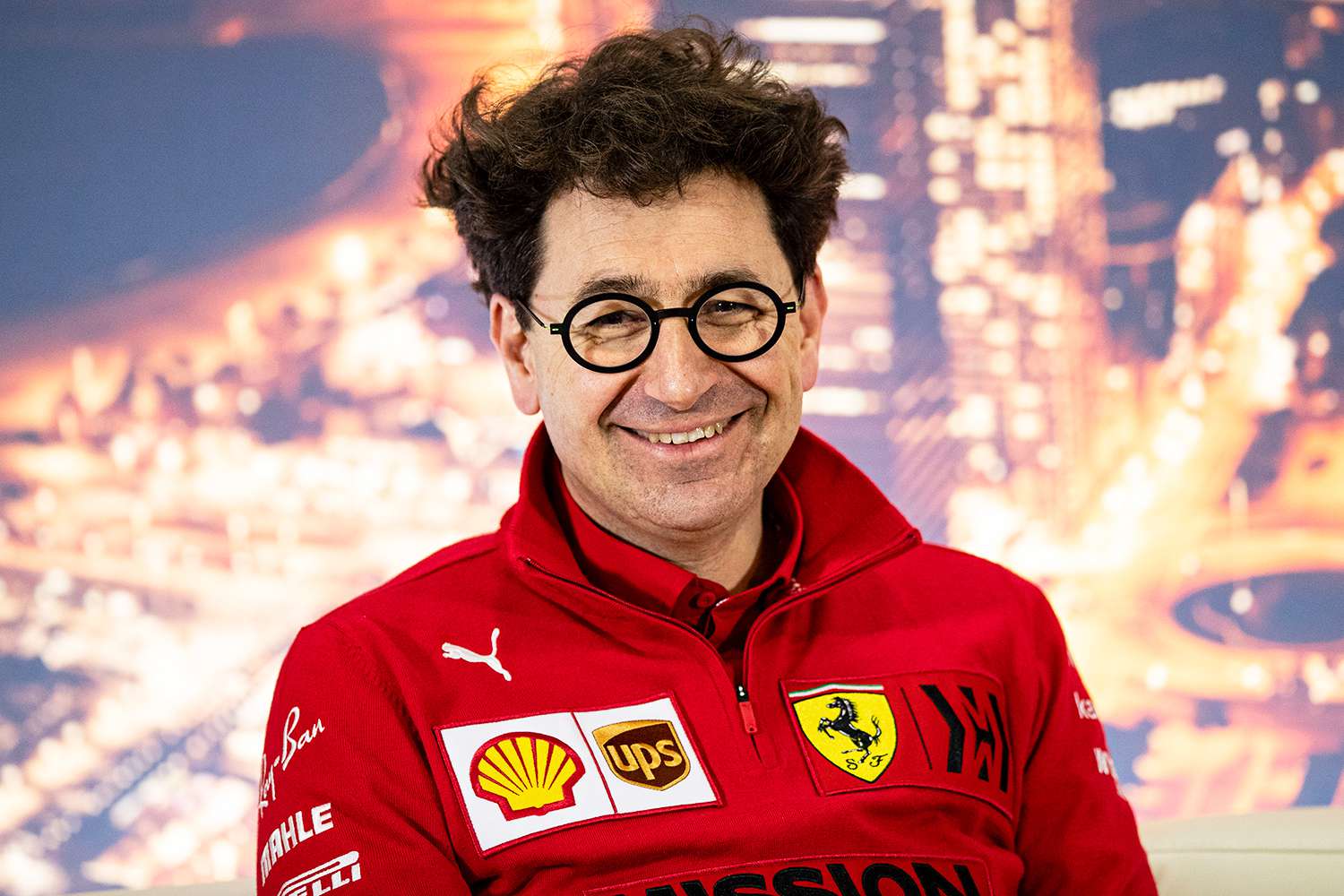
No manufacturer has ever entered Formula 1 quieter about its methods than Audi has been loud about its aim. The German marque set itself a world title by 2030 before it had turned a competitive lap, and with nine rounds of its debut season gone, ninth in the standings and six points on the board, Mattia Binotto has repeated the goal while quietly lowering the temperature around it.
"Our target is 2030: we want to build a team capable of competing for the world championship," Binotto told Motorsport.com. What he will not do is let anyone grade the project on this year's results. "I see 2026 and 2027 primarily as years of construction, rather than years judged solely on racing results," he said.
The headline number came from the top. Audi CEO Gernot Doellner committed the company publicly, saying "We aim to be fighting for the World Championship by 2030," and Jonathan Wheatley, hired away from Red Bull to run the team, has framed the task in cultural terms. "Our mission is to embed a championship DNA into every fibre of this team," Wheatley said.
Binotto is the one who has to reconcile that language with a car currently outside the points more often than in them. The power unit, Audi's first as a full manufacturer, is where he concedes ground. "Regarding the power unit, I'm not surprised. I knew we'd be starting a bit late, because we're building completely new skills and knowledge," he said, though he expects a top-notch engine inside two seasons. The chassis he rates far higher. "Regarding the chassis, however, I'm very satisfied. Everyone recognises that our car is very strong in the corners," he said. Gabriel Bortoleto's three Q3 appearances lend the claim some weight.
To defend the timeline, Binotto keeps reaching into history rather than leaning on the badge. "It's very challenging," he concedes, then points to the slow burn of even the sport's dynasties. "Jean Todt joined in 1993 and won the first title in 1999," he said of Ferrari's Schumacher rebuild. "So if you do a simple calculation, you see how long it has taken with Michael Schumacher, Jean Todt and Ross Brawn." His analogy for the impatient was sharper: "Maybe you are playing third league and you decide you want to win the Champions League. It's not that the following season because the name is Audi, you will win the Champions League."
There, in one team, are two speeds. Ingolstadt and the pit wall talk in titles; the man building the thing keeps talking in foundations. Binotto still leaves the door ajar, "If we can win before, we will try to win before," without letting anyone hold him to it.