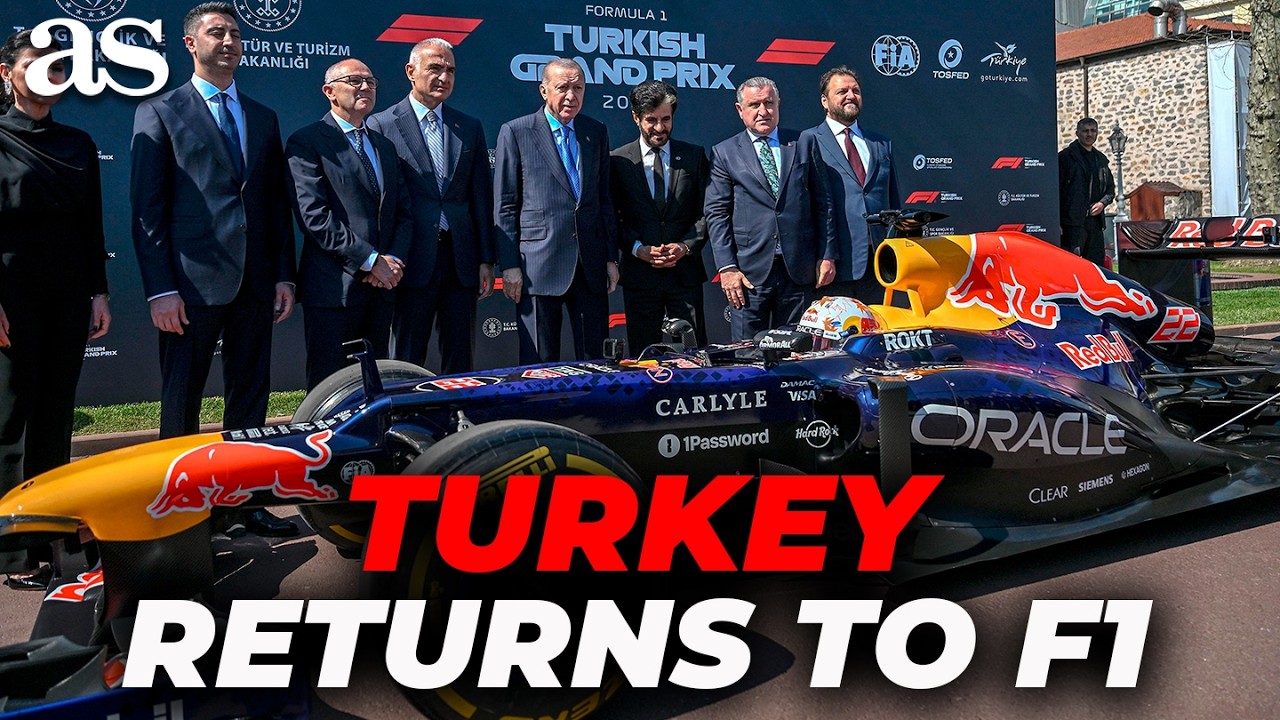
Istanbul Park is back on the Formula 1 calendar. The sport announced this week that the Turkish Grand Prix will return from the 2027 season under a five-year deal that runs through to 2031, ending a long campaign by drivers and fans for one of F1's most respected modern circuits to be brought back into the mix.
The venue, last used in 2021, has staged nine Grands Prix since first appearing on the calendar in 2005. Its 5.33-kilometre layout — defined by the multi-apex Turn 8, sweeping elevation changes and an old-school flow — is widely regarded as one of the strongest pure driver tracks the sport has built in the modern era.
F1 President and CEO Stefano Domenicali confirmed the deal in his own words, framing it around the city as much as the racing.
"We are delighted to be returning to the incredible and vibrant city of Istanbul from 2027," Domenicali said. "Istanbul represents a cultural gateway between Europe and Asia."
Turkish President Recep Tayyip Erdogan put the political weight of the country behind the announcement.
"Formula 1 ranks among the world's foremost sporting events," Erdogan said. "Istanbul Park will host five seasons of exciting races between 2027 and 2031."
The head of Turkey's motorsport federation, Eren Uclertopragi, said the local groundwork is already happening.

"We have secured the return of Formula 1 Turkish GP," he stated. "Preparations are already well underway for the race, scheduled for 2027."
The broader calendar implications matter. F1 has been under pressure to rebuild the European and Eurasian portion of the schedule after rapid Middle East and Americas expansion. Bahrain has been linked with a potential October slot in future calendars, and circuits like Imola and Zandvoort have all factored into recent negotiations. Istanbul on a five-year contract gives Liberty Media a long-term anchor outside the traditional Western European bloc.
For drivers, the news will be welcome. Verstappen, Hamilton, Leclerc and Russell have all spoken positively about Istanbul Park as a circuit they would race again. The 2026 cars — heavier, more energy-management-driven and more reliant on tyre management — should suit Istanbul's flowing layout rather than expose it.
With the deal running to 2031, the next generation of F1 talent is now guaranteed to race at Istanbul Park during their primes. After more than a decade of being treated as a calendar substitute, the Turkish Grand Prix has finally been given the kind of long-term stability that classic venues rarely get on a comeback.