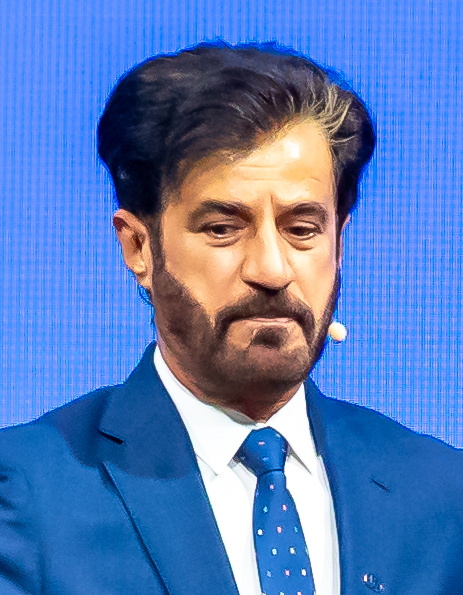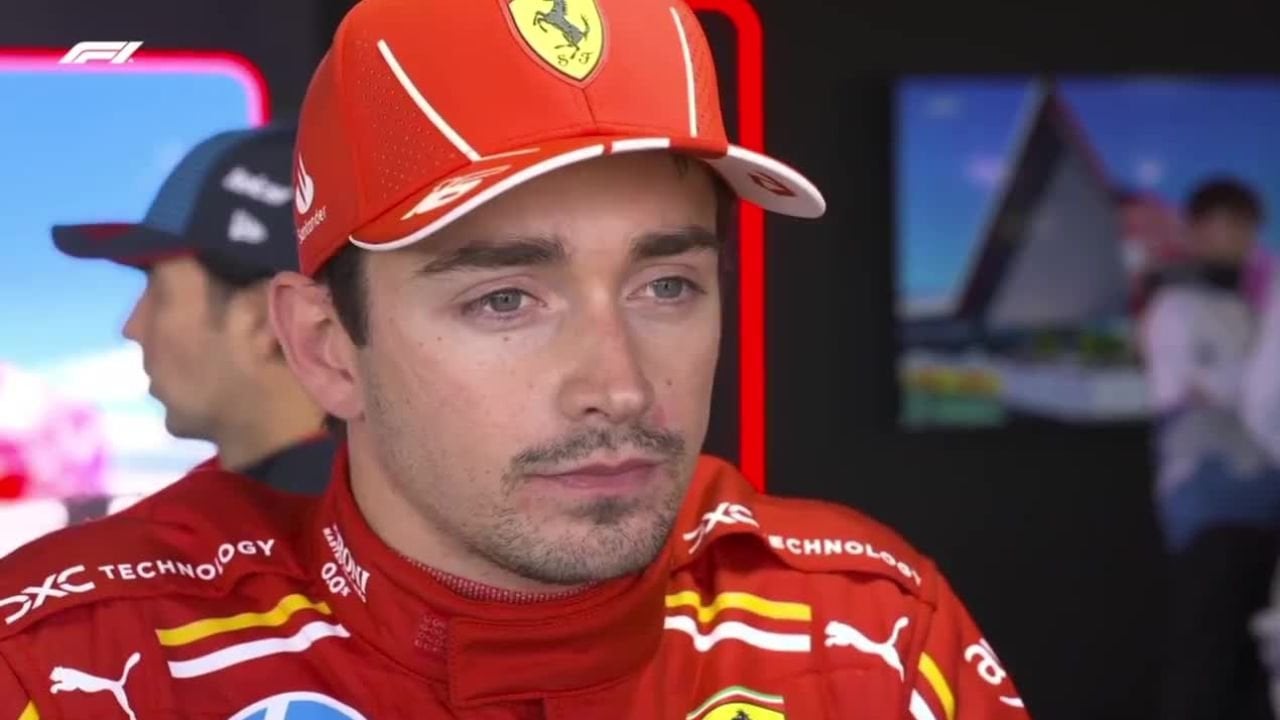
Ferrari's hierarchy in Maranello will be reading Charles Leclerc's Friday transcript more than once. The Monegasque finished his Sprint Qualifying session at the Canadian Grand Prix with a sentence very few number-one drivers are willing to speak into a microphone — and then made it worse by saying it twice.
Leclerc had qualified sixth for Saturday's Sprint, one place behind team-mate Lewis Hamilton. The lap gap is not the story. The story is what the lap exposed.
"On my side, I kind of expected it," Leclerc said. "I haven't been at all at ease with the car. I'm really really struggling with the brakes on my side of the garage for some reason. So, we need to look into it, trying to find something for tomorrow. Otherwise, it's going to be a very long weekend."
Then the second pass, which sharpened it.
"In the brakes, I get into the corners hoping that I don't end up going straight. So that's the main issue at the moment. Other than that, the car feels actually quite okay."
The sub-clause is the part that will sting inside Maranello. "The car feels actually quite okay." The car in question is a single design specification, built to identical drawings on both sides of the garage. If Leclerc's brakes are unworkable and Hamilton's are not, the gap is not in the brake supplier or the disc compound. It is in the brake-by-wire mapping, the brake-pad-warm-up procedure, the master-cylinder pressure or, most plausibly, the way the two drivers extract energy recovery into the braking phase. Hamilton has rebuilt that calibration with a new race engineer in 2026. Leclerc, by his own implicit admission, has not.
The third sentence Leclerc volunteered was the one Ferrari fans had not heard him say in any of the four previous race weekends of the season.

"Lewis has been incredibly quick this weekend."
It did not come with a qualifier. It came with the context of having watched Hamilton out-pace him on every tyre compound across the first Friday of the Canadian weekend. Peter Windsor's analysis channel underlined the point. "Charles absolutely on the limit and Lewis never really, apart from when he was on cold tyres, looking ragged at any stage," Windsor said. "It just rewards a good fluent lap, and that's what Lewis Hamilton was doing all day."
Ferrari brought no upgrade package to Montreal — a decision aligned with the team's read that the SF-26's straight-line speed should already make the car competitive on a low-downforce track. The straight-line speed has shown up. The brake confidence has not.
The parc-fermé window now closes off most of the chassis routes the team would normally take to resolve the imbalance. Brake-balance, brake-by-wire mapping and harvesting maps remain free to be reset. The reference Ferrari are working from, by Leclerc's own definition, is the set-up on the other side of the garage.

For a team whose driver order has been built around Leclerc since 2019, the most public side of Ferrari's Friday in Canada was the senior driver acknowledging that his team-mate had set the benchmark — and that he needed the engineers to find a way to get him there before Saturday.
The Sprint at Montreal will tell the team whether the gap is structural or driver-condition. Either answer is a problem.