The fastest lap in Silverstone qualifying hinged on a move that looks like a driver error. George Russell and Kimi Antonelli both eased off the throttle a few metres short of the timing line, and in doing so unlocked a sliver of pace nobody else in the paddock had found. The FIA has since ruled it legal. Getting it wrong, though, means disqualification.
The advantage hides in F1's 2026 energy regulations. Approaching the line, deployed power cannot fall by more than 50kW each second, the ramp-down rate, which usually drains the MGU-K's 350kW output before the car reaches the line. Mercedes spotted that the rule is waived the moment a driver lifts fully off the throttle: cut the throttle before the battery drains and the MGU-K can shut its output off instantly and still comply, holding maximum deployment later into the run to the flag. The Race estimated the gain at roughly 0.05 seconds per lap. gpblog's telemetry had Antonelli on 40% throttle where Hamilton sat at 94%, the Mercedes slower through that phase but sitting on more usable energy.
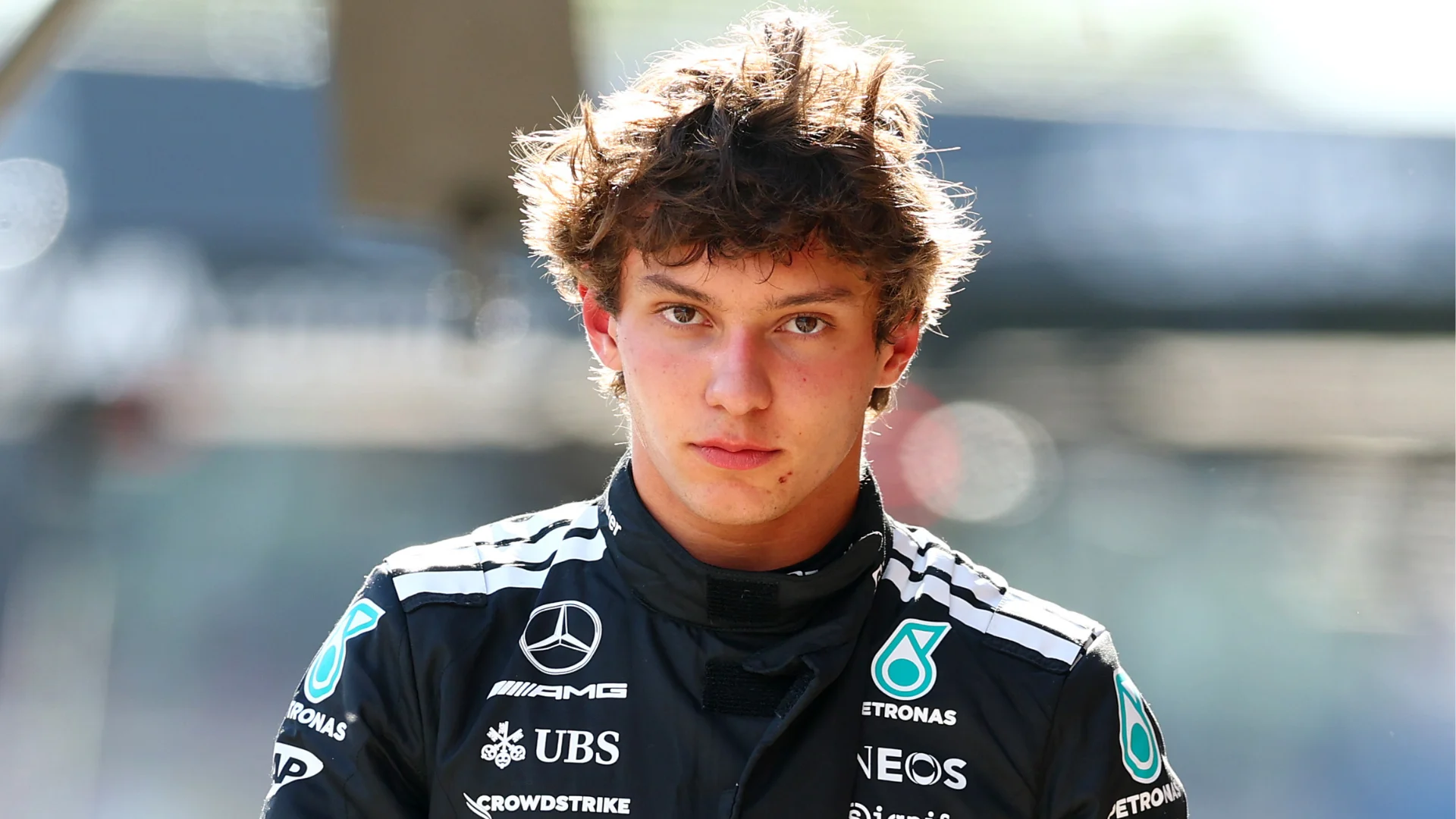
Antonelli made clear it is an unnatural thing to ask of a driver. "It wasn't easy. In Q3 I also had to lift off, and with these power units it's always a bit complicated because sometimes you have to drive in a way that doesn't feel completely natural," he said. He explained where the time comes back: "You might lose a little on corner exit, but then you make it back because by delaying the moment you get back on the throttle, you have more energy available further down the straight." Mercedes rehearsed it in the simulator and gave each driver an audio tone at a set battery level to cue the lift. "It's complicated, but thanks to the preparation we did together with the team, it all became almost second nature," Antonelli said.
The Race reported that FIA sources judged the tactic fully compliant, so long as power never dropped by more than 50kW in a single second before the lift.
Even so, it blindsided McLaren. "When we first noticed it yesterday in sprint qualifying, as Antonelli was doing it, it caught us a little by surprise because it's not something we'd discussed," team principal Andrea Stella said. Oscar Piastri put it more simply: "I didn't even know they did it, which probably says a lot."
And McLaren cannot just lift the idea across. "I'm not sure at all that it's available to us, because it requires probably some further elements to use the power unit, let's say," Stella said, pointing out that the team only expects the newest Mercedes power-unit specification from the Belgian Grand Prix.
The catch is why nobody has rushed to copy it. Lift a moment too late, drain the battery to zero, and the MGU-K cuts power under load, a technical breach that can wipe out a qualifying result and drop a car to the back. Battery levels shift from lap to lap, so drivers have no fixed marker, only the tone in the ear. The Race called copying it a high-stakes gamble, a few hundredths against the risk of binning an entire Saturday.

It is a snapshot of where the 2026 rules are pushing teams, with performance tucked into the regulations for whoever reads them first. Spa, with its longer drag to the line, will test whether Ferrari, Red Bull and McLaren decide the reward is worth the danger.