On pure speed, Mercedes should be running away with 2026. It has the quickest car and leads both titles. What keeps the team up at night is not Ferrari, but its own battery. Power-unit failures have already erased two wins that were all but banked, and Lewis Hamilton, now racing for Ferrari, reckons more pain is coming in the form of grid penalties.
The pattern is clear enough. In Montreal, George Russell was out front when his car cut out. In Barcelona, Antonelli sat second with three laps to go before an electrical shutdown stopped him. At Silverstone, a wheel-rim failure took another probable win off Antonelli. Three race weekends, three finishes that never happened.
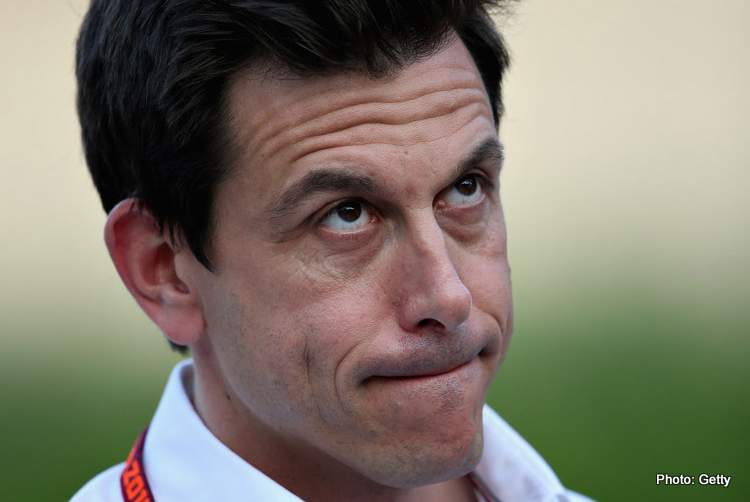
Toto Wolff has been candid about it. "In order to finish first, first you have to finish. Reliability, this is what we need to get on top of. That's number one," the team principal said after Barcelona. It is the points ledger that gnaws at him. "We just can't compete for a championship if every second race a car is losing fat points." He captured the season's strange shape in a line: "Generally, we just had too many DNFs and lost two second places and now one victory." Given the choice, Wolff would sacrifice a little speed for certainty. "I'd rather dial back, a little bit, something that is really good, and fix some of the reliability gremlins, rather than running behind on performance."
Technical director James Allison has tracked the breakages to one area. "They're not all identical, but they do sort of originate in the same broad part of the battery," he said, promising that new modules, the team's word for the battery packs, should improve matters as they roll in. He was frank about the toll. "These DNFs are very, very painful." And he set it against the eternal engineering compromise. "You accept that there will be failure. We try to make sure that failure happens in testing or on rigs and that it happens as little as possible when you're out there trying to earn championship points."
Then there is the rulebook. For 2026 each driver gets a capped allocation of power-unit parts, four internal combustion engines but only three of the energy-store and control-electronics units where Mercedes keeps failing, and exceeding it triggers automatic grid drops. Hamilton, whose Ferrari has run like clockwork, expects the reckoning. "At some point there must be a penalty, I would imagine, in the sense that we only have two battery cells or something like that," he said, adding that Mercedes engines "in general have had more issues this year than they normally would have." Ferrari's reliability, by contrast, left him "massively impressed."
All of it matters more now that the standings are compressing. Antonelli still tops the drivers' table on 179 points, but a lead that stood at 65 points after Monaco is down to roughly 25 over Russell, with Hamilton edging closer behind. "We've got a close fight now with Ferrari, so it's not just Kimi and I, Lewis is still very close," Russell said. The constructors' advantage is intact for now, but it is no longer the comfort it was.
Everything rests on Allison's new battery modules doing their job. Until they land and hold together, the fastest car in the field still tows a doubt none of its rivals share: not can it win, but can it get to the end.