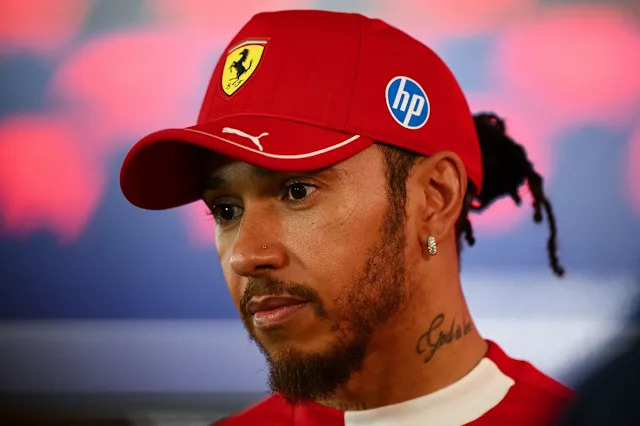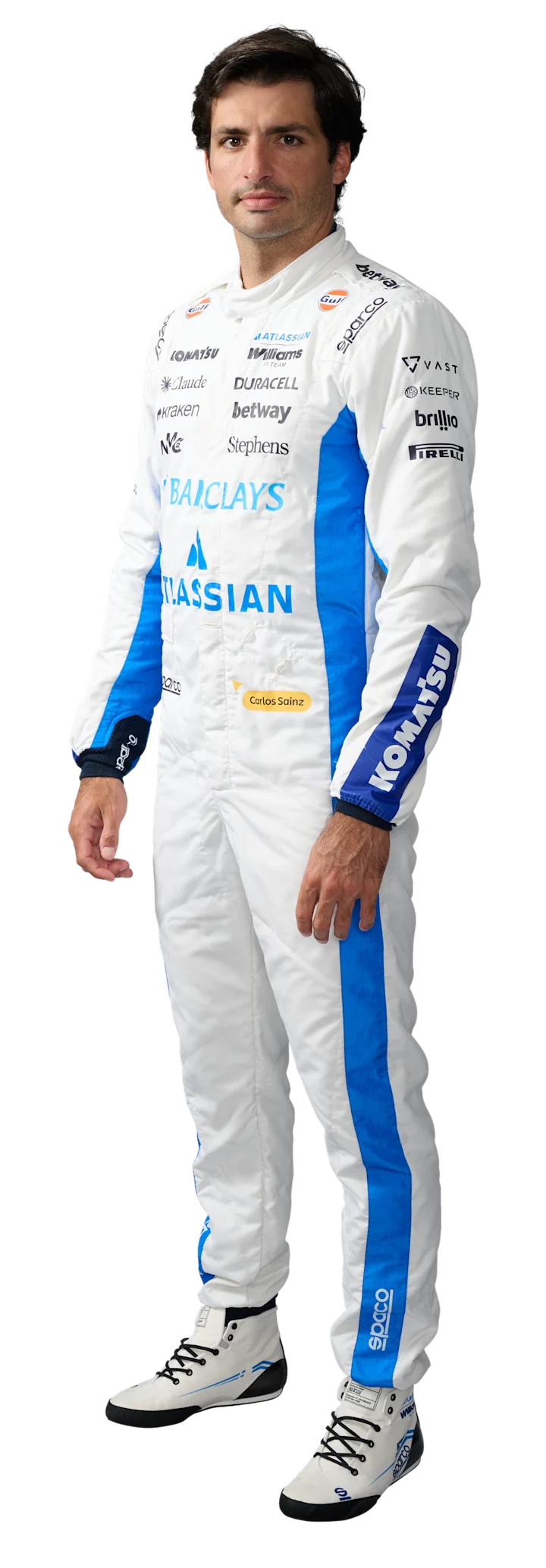
It would be easy to write off Carlos Sainz's latest idea as the grumbling of a driver having a miserable year. The Williams man has six points to his name in 2026, a best result of ninth, and a home race in Barcelona where he started 16th and was lapped twice by winner Lewis Hamilton. Yet his proposal to rewrite how F1 crowns its champion deserves more than an eye-roll.
Few drivers on the grid have sampled as much machinery as Sainz, who has raced for Toro Rosso, Renault, McLaren, Ferrari and now Williams. That breadth of experience is the foundation of the format he sketched out to Spanish newspaper Mundo Deportivo: a 20-race calendar where no driver spends more than two rounds in any one car.
"I have a somewhat crazy idea that I don't think I've ever talked about publicly," Sainz said. "I've always imagined an F1 where teams and drivers are separated."
In his vision, both titles survive but are decoupled completely. A driver scores points in whatever car he happens to be racing; a constructor banks points from whichever driver rotates into its seat that weekend.
"In that case, the driver would be part of F1, not a team," Sainz explained. "He would be an F1 client, hired by F1 to drive the cars. So, I'd have the chance to do two races with Williams, two with Mercedes, two with Ferrari, and so on. All drivers would have exactly the same chance of winning the title."
His reasoning is unambiguous. "You'd completely disassociate the brands from the drivers," he said. "And that way you'd have a real drivers' championship and a real manufacturers' championship." He was equally clear that none of it is coming to pass: "This will never happen, of course."
So why air it? Read Motorsport's Veerendra Singh suggested the proposal "cuts to the heart of what F1's drivers' championship actually measures" — talent versus engineering budget — a tension Sainz has lived all season as the car, not his driving, has set the ceiling on his results.

There is a layer of irony, too. As GPblog's Kieran Lynch observed, Sainz reckons he is producing one of his "strongest seasons" at the wheel even as the standings tell a bleak story. In his view, a better car would expose just how good that driving has been.
The obvious objection is the one MotorBiscuit raised: persuading the drivers in the quickest cars to climb into a backmarker for two rounds would take "considerable convincing." Imagine Max Verstappen lumped with a Sauber while a tail-ender takes over his Red Bull — thrilling to watch, impossible to sell to a team that has poured fortunes into a single car concept.
Sainz himself files the idea firmly under fantasy. But coming from someone who has driven five wildly different cars and is currently stuck in the wrong one, it lands as a genuine provocation rather than a soundbite — a reminder that in a sport defined by machinery, nobody can ever be entirely sure who the best driver really is.