
Nürburgring
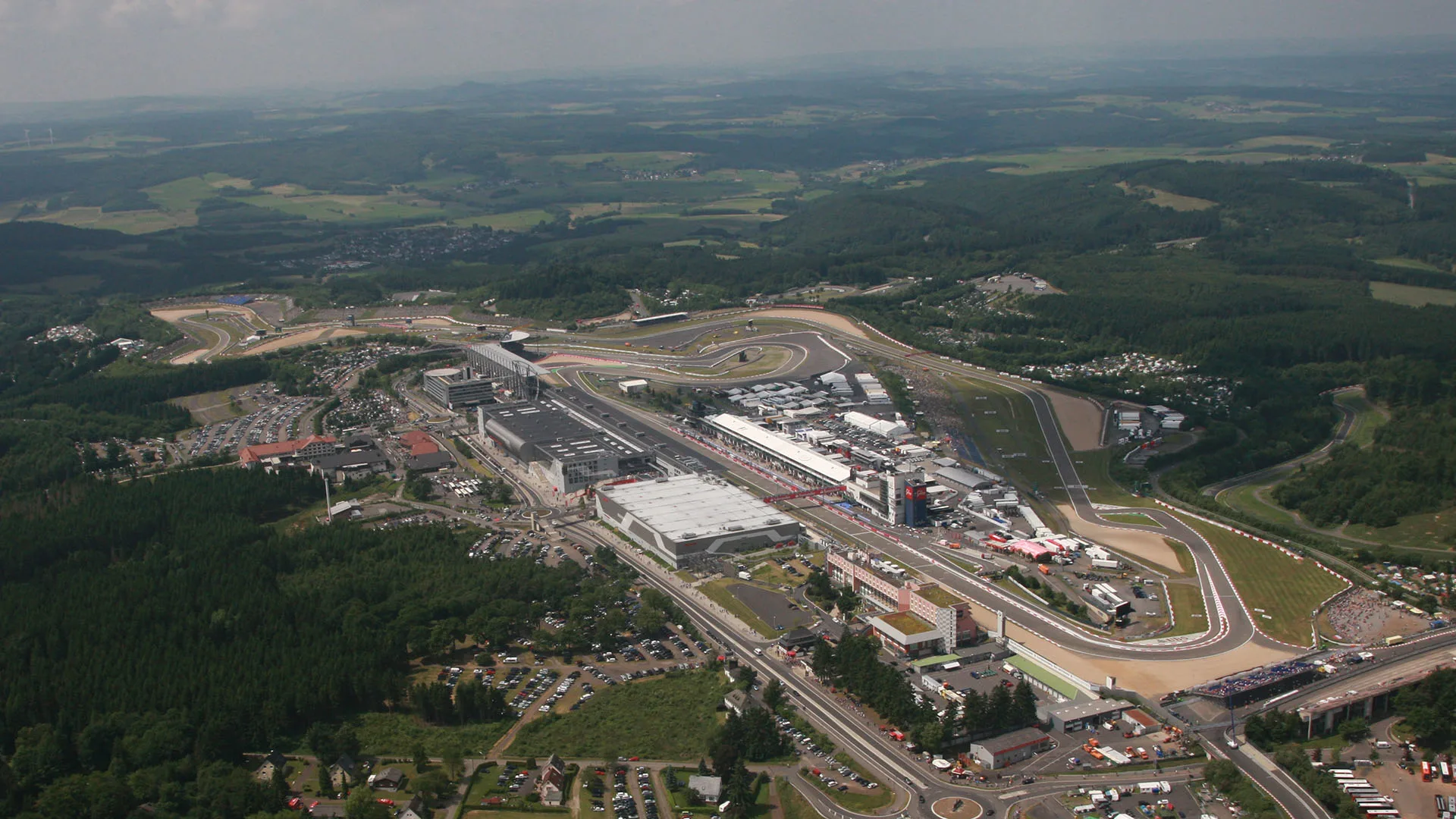
Carved through the dense forests of the Eifel Mountains in western Germany, the Nürburgring stands as one of motorsport's most revered and challenging venues. This legendary circuit complex has earned its reputation through nearly a century of racing history, combining the modern Formula 1 facility with the fearsome original Nordschleife to create a destination that commands respect from drivers across all categories of motorsport. The circuit's origins trace back to the 1920s when construction began on what would become known as the "Green Hell." The original 22.8-kilometer Nordschleife, completed in the mid-1920s, wound through the Eifel countryside with over 170 corners and dramatic elevation changes that could exceed 300 meters. This mammoth circuit quickly established itself as the ultimate test of driving skill and mechanical reliability, hosting the German Grand Prix and countless other prestigious events throughout the following decades. However, by the 1970s, the Nordschleife had become too dangerous for Formula 1's evolving safety standards. After Niki Lauda's near-fatal crash in 1976, the sport moved away from the original circuit, prompting the construction of a modern Grand Prix facility. The current Formula 1 circuit, measuring 5.148 kilometers, was built in the 1980s and incorporates a section of the original Nordschleife while meeting contemporary safety requirements. The modern Nürburgring Grand Prix circuit presents drivers with a fascinating blend of technical challenges and high-speed sections. The layout begins with a tight first corner complex that often creates bottlenecks during race starts, followed by a series of medium-speed corners that test car balance and aerodynamic efficiency. The track's most distinctive feature is the stadium section, where spectators can witness multiple parts of the circuit simultaneously from the grandstands. One of the circuit's defining characteristics is its significant elevation changes, inherited from its location in the rolling Eifel landscape. These undulations affect car setup considerably, as teams must balance aerodynamic packages for both the high-speed sections and the more technical portions where mechanical grip becomes crucial. The surface typically provides good grip levels, though weather conditions can change rapidly due to the region's unpredictable climate, adding another variable for teams and drivers to consider. The circuit offers several prime overtaking opportunities, particularly into the tight first corner and at the end of the main straight leading into the Mercedes Arena section. The layout's variety means that cars with different strengths can find opportunities to attack, whether through superior straight-line speed or better handling through the technical sections. This diversity has produced some memorable wheel-to-wheel battles over the years. Max Verstappen currently holds the official lap record for the Formula 1 configuration, having posted a time of 1:28.139. This record stands as testament to both the Dutch driver's exceptional skill and the ever-increasing performance capabilities of modern Formula 1 machinery. The 60-lap race distance provides ample opportunity for strategic variation, with tire degradation and fuel consumption playing crucial roles in determining race outcomes. Beyond Formula 1, the Nürburgring complex hosts an extraordinary variety of motorsport events throughout the year. The legendary Nordschleife continues to serve as a proving ground for manufacturers testing production vehicles and as the venue for endurance races including the grueling 24 Hours of Nürburgring. This marathon event attracts hundreds of entries across multiple classes, from touring cars to prototype racers, creating a spectacle that celebrates grassroots motorsport alongside professional competition. The circuit's significance extends far beyond its role as a racing venue. For automotive manufacturers, a quick lap time around the Nordschleife has become the ultimate bragging right, with countless production cars having attempted to claim the unofficial title of fastest road car around the "Ring." This pursuit has driven automotive development forward, as manufacturers push the boundaries of performance, handling, and technology in their quest for Nürburgring supremacy. The facility's unique dual identity – combining the modern Grand Prix circuit with the historic Nordschleife – creates an atmosphere unlike anywhere else in motorsport. Visitors can experience both the cutting-edge professionalism of Formula 1 and the raw, unforgiving challenge of the original circuit that helped forge motorsport legend. Weather conditions at the Nürburgring can be particularly challenging, with the microclimate of the Eifel region capable of producing rain, fog, or brilliant sunshine with little warning. These conditions have played decisive roles in many races, rewarding drivers who can adapt quickly to changing circumstances while catching others off guard. Today, the Nürburgring continues to evolve while respecting its extraordinary heritage. The facility regularly upgrades its infrastructure to meet modern standards while preserving the essential character that makes it special. When Formula 1 returns to the circuit, whether for the German Grand Prix or other events, it reconnects with one of the sport's most important historical venues. The Nürburgring's enduring appeal lies in its ability to challenge every aspect of driver skill and machine performance while maintaining the mystique and respect that decades of motorsport history have created. From the precision required on the modern Grand Prix circuit to the courage demanded by the Nordschleife, this remarkable complex continues to define what it means to be tested by one of motorsport's most demanding and celebrated venues.