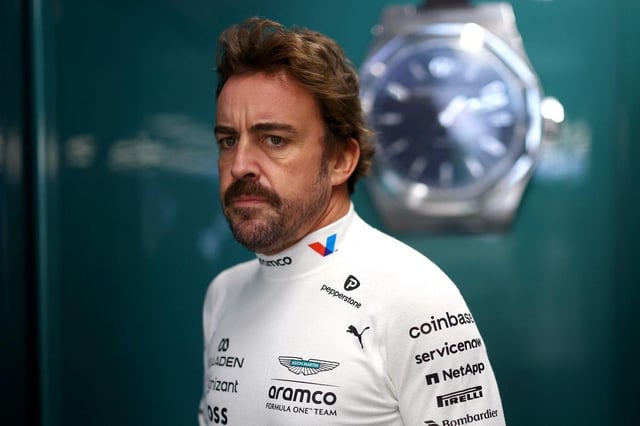
Fernando Alonso has never been a man to mind the room. Asked in Montreal whether the 2027 engine tweak being celebrated by Max Verstappen and others would finally address F1's overtaking problem, the Aston Martin driver did not even bother to soften the rejection.
In his view, F1 has been on the wrong track since 2014, and tweaking the energy ratios in 2027 will not change the underlying fact.
"Unfortunately, we had this period from 2014 with the turbo era, and now even more, that we lost nearly one decade or even more of pure racing," Alonso said.
That is the headline. The 2014 reference – the year hybrid V6 power units replaced the V8s – is deliberate. Alonso is not just complaining about the 2026 ground-effect cars. He is indicting the entire hybrid era as a project that has cost F1 a generation of racing.
Where it gets sharper is when Alonso describes what modern overtaking actually looks like from the cockpit.
"It will not be overtaking, it's just an avoiding action," he said.
He explained the mechanic in stark terms.

"When you have more battery than the others, the other ones clip, so they reduce 500 horsepower," Alonso said. "Then you have 500 horsepower more than the others, you take an avoiding action, and then you overtake a car."
The charge is that current overtakes are essentially electrical accidents. One car runs short of deployable energy on a straight, drops 500 horsepower, and the trailing car has no choice but to take "avoiding action" – a polite way of saying they cannot help passing. There is no braking duel, no commitment, no outsmarting. It is energy management math.
Whether the 2027 patch – the move toward a roughly 60-40 combustion-to-electrical split – fixes any of that, Alonso flatly does not believe.
"Waiting," he said when pressed. "The DNA of these power units will always be the same. And it will always reward going slow in the corners."

That is the kind of line that lands inside paddock memos for years. "Reward going slow in the corners" describes the regenerative logic of the modern hybrid: the harder you brake, the more energy you harvest, the more deployment you have on the next straight. It is, from Alonso's perspective, a system that systematically punishes the kind of aggressive cornering F1 used to be built around.
It is worth saying out loud how unusual it is for a driver, mid-season, to publicly question the entire engine formula in this way. F1 drivers normally pick their battles around safety, sporting regulations or specific incidents. Direct attacks on the conceptual foundation of the regulations are rare.
The context behind Alonso's bluntness is interesting. Aston Martin's 2026 Honda partnership has not delivered the kind of front-running performance that some had quietly hoped for, and the Spaniard's career window is narrowing. He has the freedom to say things younger drivers cannot afford to.
He is also not alone. Liam Lawson, in Miami, called for "playful" cars and "cool noises". Multiple drivers have backed the idea of returning to V8 power as soon as 2031. The broader paddock signal is that the regulators have not yet won the dressing-room argument about what F1 should feel like.
Max Verstappen welcomed the 2027 tweak this week with the word "minimum". Alonso has, in effect, said the minimum is not enough. The 2027 tweak, in his telling, is a cosmetic tweak on a structurally broken formula. The fix, if it comes, has to come from the next reset entirely.
For now, the most experienced man on the grid has put F1 on notice. The hybrid era will not be remembered, in his telling, as a step forward. It will be remembered as a decade lost.