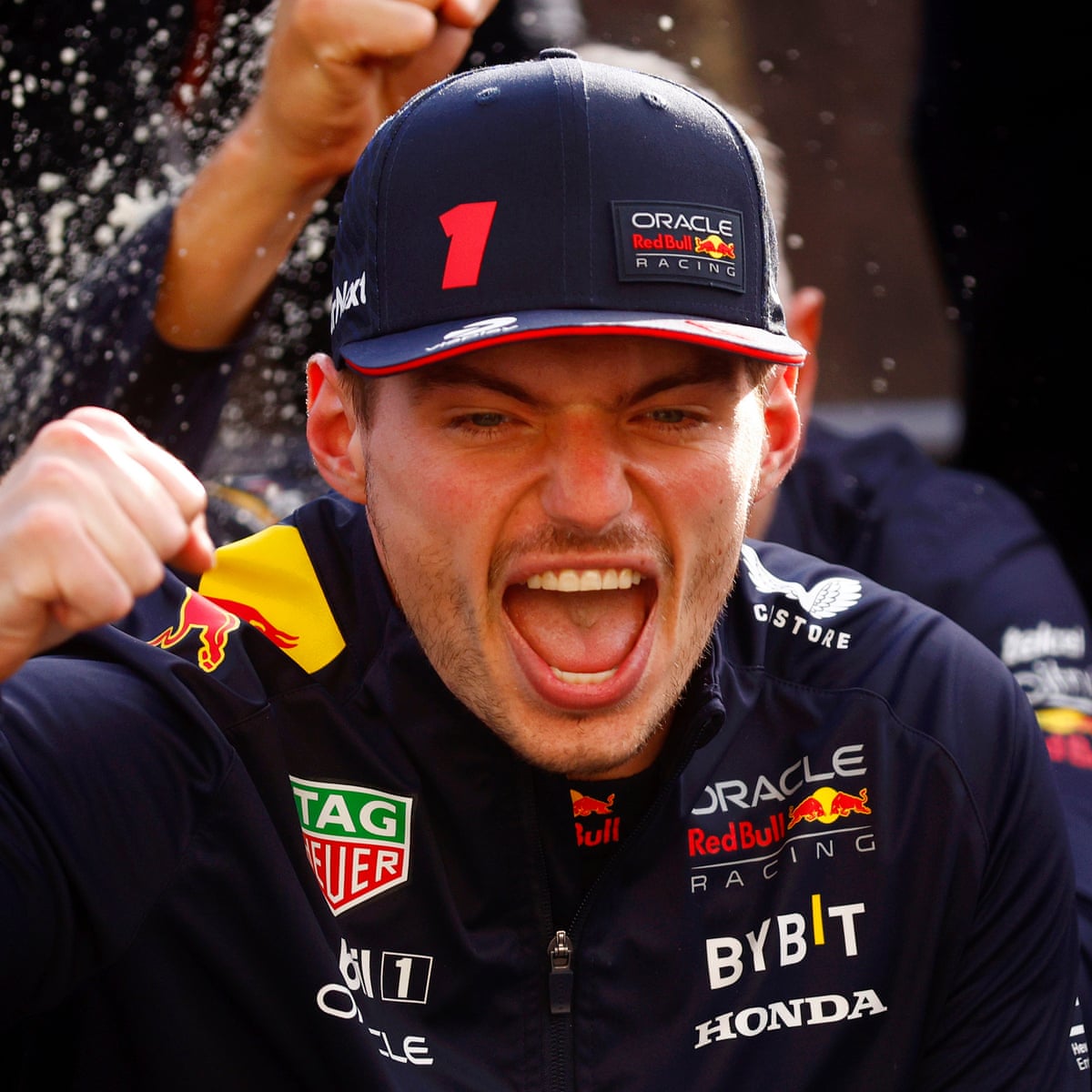
Max Verstappen's relationship with the 2026 Formula 1 regulations has not been a quiet one. He warned in 2023 that the cars would look terrible. He warned over the winter that they would not race well. And in the opening months of this season he has been clear that the product, in his view, was drifting away from what made F1 worth doing.
In Montreal this week, that rhetoric came off the boil.
Asked about the 2027 engine tweak – the proposed shift away from the 50-50 hybrid split toward a stronger combustion contribution – the four-time world champion gave one of his most positive on-record assessments of an F1 governance decision in years.
"I mean, it's definitely heading into a very positive direction," Verstappen said. "I think it's like the minimum I was hoping for, and I think it's really nice that that's what they want to do. That's definitely what I think also the sport needs."
Minimum is the word that matters. Verstappen is not endorsing the tweak as a complete fix. He is endorsing it as the floor of what was acceptable to him. That signals two things at once: the tweak does enough to keep him interested, and anything less would have been a deal-breaker.
Which brings us to the question that has loomed over every paddock conversation about Verstappen's future for the last twelve months: does it actually keep him in F1?
"Yes, definitely," Verstappen said. "I mean, I just want a good product in Formula 1 and that will for sure improve the product."

He expanded.
"I mean, like I said before, it will make the product better. So that means that I'm happier and that's what I want to be able to continue in Formula 1," he said. "I always wanted to continue anyway, but I always wanted to see change."
That last clause – "I always wanted to continue anyway" – is the line F1 management will be quietly celebrating tonight. It is the first time Verstappen has explicitly characterised his exit threats as conditional rather than absolute. The condition was a tangible regulatory adjustment, and the regulators have now made it.
The tweak itself, agreed in principle by the F1 Commission earlier this month, is a direct response to the power-clipping and energy-deployment issues that have plagued the early 2026 races. Drivers including Carlos Sainz, Lando Norris and even Verstappen himself have flagged scenarios in which cars suddenly drop hundreds of horsepower mid-lap, creating awkward closing speeds and artificial-feeling overtakes. The proposed 60-40 combustion-to-electrical split is intended to reduce that effect and give drivers more usable energy through a lap.
Verstappen also softened the antagonistic tone of recent months toward the FIA and Liberty Media.
"It's just great that they're open-minded and they listen to the drivers," he said. "We just want to make it a better product and that's why you come up with recommendations."
For a paddock used to Verstappen using press-conference time to flag friction with the governing body, that comment is its own piece of news.
The wider context matters too. Lewis Hamilton, in the same media room this week, told reporters he is planning five years ahead. Christian Horner is being talked up as the head of a potential BYD F1 entry. Fernando Alonso, in Verstappen's contrast, called the hybrid era a "lost decade" of pure racing. Set against all of that, Verstappen offering F1 a public reason to keep him beyond his current Red Bull deal is significant in its own right.
It is not a contract announcement. It is not a public guarantee for 2028 and beyond. But for the first time since the 2026 rules were locked in, Verstappen has told F1, in plain language, that what is coming next is enough.