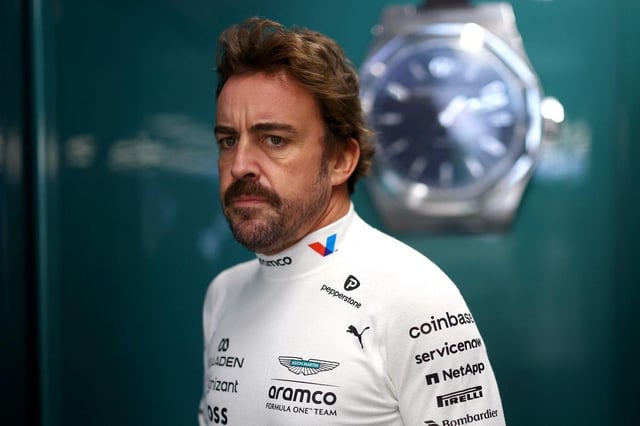
Of all the ways a Grand Prix can end early, Fernando Alonso's exit from the Canadian Grand Prix ranks among the most curious of 2026. There was no engine failure, and none of the vibration trouble that has plagued Aston Martin. The culprit was his seat.
The team began the year wrestling with vibrations severe enough to shake components, and at times the drivers, out of races. What stopped Alonso in Montreal was a different beast entirely.
The Spaniard offered little detail himself. Aston Martin filled in the gaps later, framing it as a problem that may require a design change rather than a simple failure.
It stems from the pursuit of an ideal driving position for car performance. The seat has been angled further back, leaving both Alonso and Lance Stroll reclining more than they used to. For Alonso, that adjustment seems to have created a pinch point that only becomes a genuine problem under the prolonged physical demands of a race, and in Canada it grew until he had to stop.
The team expects a short-term fix and has earmarked it as a priority before Monaco. On a circuit as physically relentless as the principality, where drivers wrestle the car for the best part of two hours, stamping out any cockpit discomfort quickly will matter.
For Alonso, it is one more entry in a season where odd setbacks and reliability have repeatedly got in the way. The raw pace has shown itself at points for Aston Martin Honda; the harder task has been keeping both cars running long enough to bank it. A troublesome seat was surely not on the list of problems a driver of his pedigree expected to be unpicking after a race.