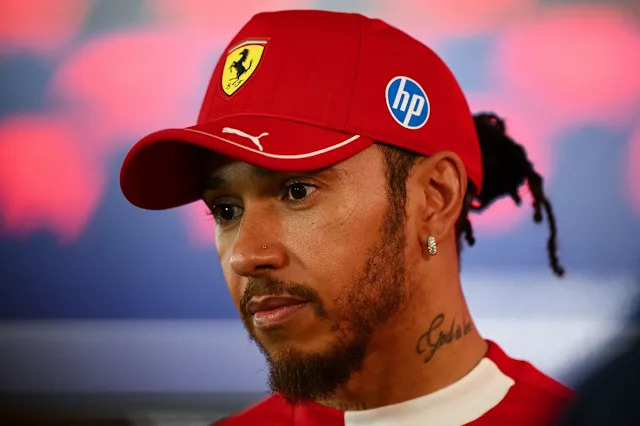
Lewis Hamilton's best weekend yet in Ferrari red, a second place at the Canadian Grand Prix achieved without bothering to log a serious simulator session beforehand, has prompted David Coulthard to do what experienced ex-drivers do best: temper the optimism with hard organisational maths.
Speaking on Formula 1's official Beyond The Grid podcast, the thirteen-time grand prix winner acknowledged Hamilton's behind-the-scenes work at Maranello while pointing out something less convenient. Modern teams, he argued, are too large and too rigid to be reshaped by a single driver in the few seasons the seven-time champion has left at the front of the sport.
"The teams are so big now, no matter how much Lewis will tell us he's been at the factory and he's been on the simulator," Coulthard said. "To affect change and influence change in an organisation that large, I think just takes a long, long time."
The implicit comparison was Mercedes, where Hamilton spent the bulk of the previous decade inside a team Coulthard described as having been shaped around his strengths. Six of Hamilton's seven world titles followed.
"I'm not sure he'll have the time to really make it the way he was able to," Coulthard added. "Mercedes were shaped around his needs and it was tremendously successful."
Hamilton has consistently rejected any suggestion he is winding down. In Montreal, he doubled down on that public stance, telling reporters retirement is not in the planning. The on-track evidence in Canada backed him up. He out-qualified team-mate Charles Leclerc, raced him cleanly through both sessions of the weekend, and finished 34 seconds ahead of him on Sunday in conditions that punished every misjudgement.
Internally, that gap is being read carefully. Charles Leclerc, the driver Ferrari spent twelve months pitching as the centrepiece of its rebuild, told race engineer Bryan Bozzi over open team radio not to speak to him until the final lap unless something critical happened. Team principal Fred Vasseur's post-race characterisation of Hamilton was specific and warm. His description of Leclerc was that the race had been difficult. The Maranello pecking order, in other words, has materially shifted across a single weekend.

What Coulthard's framing does is separate that short-term momentum from the longer-term question of structural change. Even if Hamilton runs at this level for the next two seasons, the Scot's point is that Ferrari, as an organisation, cannot pivot around him in the way Mercedes once did - because no team of this scale moves that fast.
Hamilton joined Ferrari to win an eighth world title in red. Coulthard's assessment is not that he cannot win at Ferrari. It is that the runway required to win on his preferred terms may already have been compressed by the calendar. Monaco, where Hamilton has stood on the top step three times, will offer the next test of whether the Canadian momentum is a turning point or an outlier.