Mercedes are winning races. Jolyon Palmer's verdict is that they are also starting to lose them, in micro-moments that only fully reveal themselves in wheel-to-wheel combat.
The former F1 driver used his breakdown of the Japanese Grand Prix to flag what he sees as a strategic problem inside the Brackley camp: Mercedes' championship position is forcing them to race cautiously, and their rivals know it.
"The Ferrari and the McLarens are both really aggressive with the Mercedes all the time because they know in wheel-to-wheel battle the Mercedes have to be that little bit more cautious," Palmer said in his analysis. "They're clearly playing for the championship already. Maybe the Ferraris, the McLarens will be, but right now it seems a long shot."
The maths supports him. Mercedes are 45 points ahead of Ferrari in the constructors and have rookie Kimi Antonelli leading the drivers. A first-lap incident that wrecks a race costs them disproportionately more than it costs a chasing team. Ferrari and McLaren arrive at every corner a fraction more willing to commit.
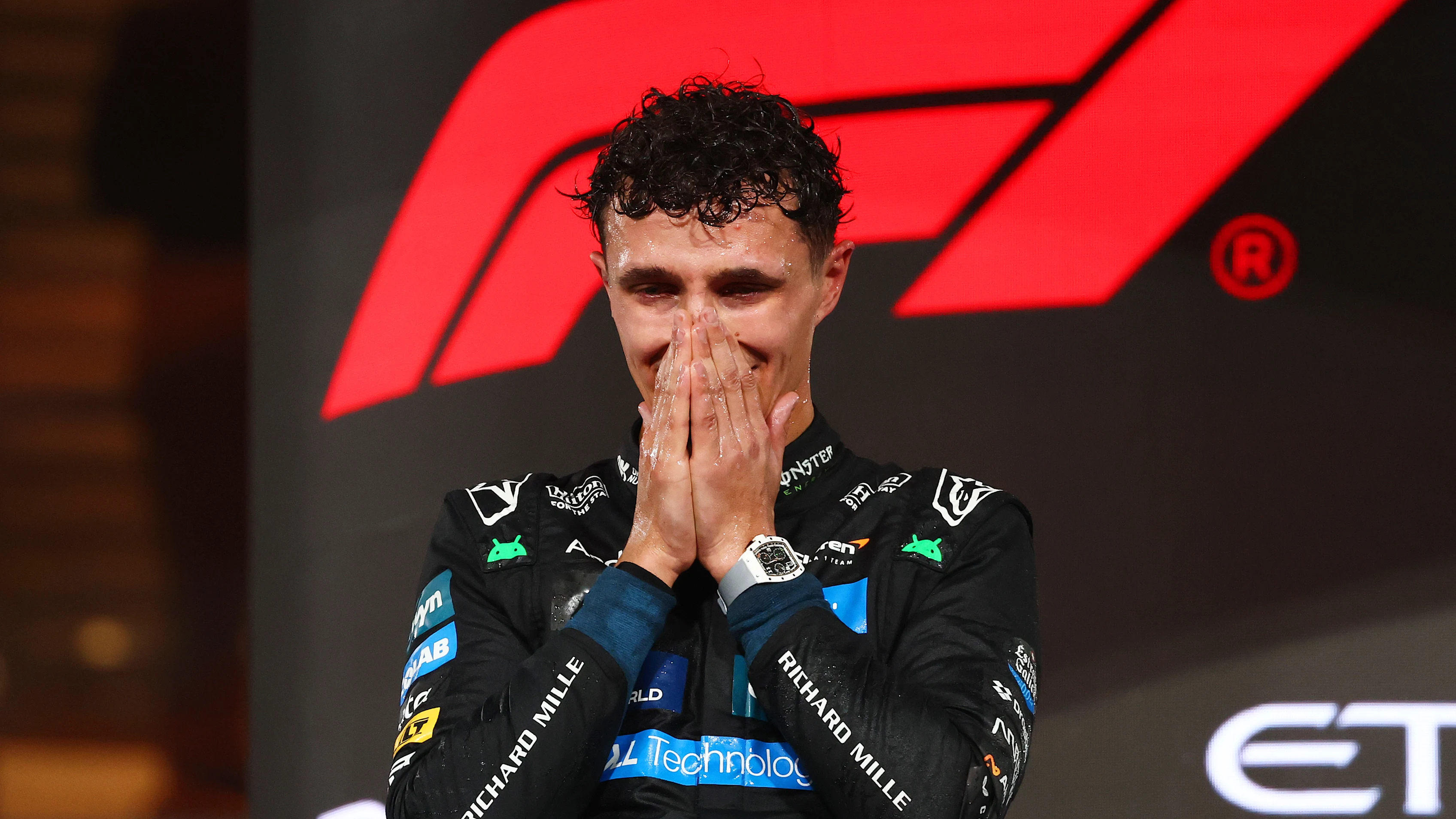
Palmer turned the argument into a specific driver critique of George Russell. "George is quite cautious. He's quite tentative fighting with the rivals in these early corners. Warm-up's not great for them. And Lando simply releases the brakes and sweeps right around the outside of George to take third place away from him."
The moment he referenced is one of the cleaner early-race passes of the season. Lando Norris did not need to make a move on Russell in the traditional sense. He simply used the outside line through the first complex at Suzuka, and Russell gave up the position rather than invite contact. That is the behaviour Palmer believes Mercedes will pay for.
The paradox is obvious. A team dominant enough to be fighting for both championships has to ration the kind of aggression that defines those championships on the track. Antonelli's podium-pole-win execution in Japan is partly the product of his own rookie-year fearlessness. Russell, who has spent longer inside the Mercedes system, is the one showing the hedging.

Ferrari and McLaren see it, and both arrive at Miami with upgrades designed to make wheel-to-wheel combat an environment Mercedes cannot talk their way out of. Ferrari validated their package — including the Macarena rear wing — at Monza this week under the updated FIA energy management rules. McLaren have continued to harvest points and have Lando Norris publicly on the warpath against the 2026 regulations. Both have nothing to lose by racing Mercedes hard.
If Mercedes continue to lead, Palmer's critique becomes a footnote. If Ferrari or McLaren produce a car that can genuinely run with the W17, the tentativeness Palmer has diagnosed — particularly in Russell — becomes the pressure point the entire 2026 season turns on. Miami is the first weekend where that test is likely.